

According to classic Chinese tea literature and modern expert research, yellow tea is one of China’s six major tea categories and the rarest lightly fermented tea type, defined by its signature “three yellows” — dry yellow leaves, golden liquor and yellow infused leaf base. Its unique men-huang (yellowing) craft creates a smoother, milder flavor than green tea while preserving high levels of polyphenols and amino acids. This guide covers the full history, production regions, evidence-based health benefits and detailed sensory analysis of the top 10 most valued yellow tea cultivars, helping tea enthusiasts identify authentic regional yellow teas and master tasting and brewing techniques.
1. Origin, History & Major Production Regions of Chinese Yellow Tea
1.1 Historical Evolution from Tang to Ming Dynasty
The earliest records of yellow tea date back to China’s Tang Dynasty (618–907 AD), when naturally yellow-hued tea buds such as Shouzhou Huangya were prized as imperial tribute. The intentional yellowing processing method formally emerged in the Ming Dynasty, born from a serendipitous discovery during green tea production: when freshly killed leaves were left piled too long before drying, they turned yellow and developed a rounder, less bitter taste. Artisans gradually refined this into the controlled men-huang fermentation step that defines yellow tea today. By the Qing Dynasty, premium yellow teas including Junshan Yinzhen and Mengding Huangya were firmly established as royal tribute teas.
1.2 Core Production Regions & Terroir
Yellow tea is exclusively produced in China, with concentrated growing zones across six provinces. Each terroir shapes distinct flavor and appearance characteristics:
1.Yueyang, Hunan — Recognized as the hometown of Chinese yellow tea, home to Junshan Yinzhen grown on Dongting Lake’s Junshan Island and Beigang Maojian. Humid lake-mist climate produces delicate, sweet yellow bud teas.
2.Ya’an, Sichuan — High-altitude Mengding Mountain terroir, birthplace of Mengding Huangya with 2,000 years of tea history. Cloud-shaded growing conditions create tender, sweet buds with deep floral notes.
3.Huoshan, Anhui — Dabie Mountain region producing both premium Huoshan Huangya and bold Huoshan Huangdacha. Mountain temperature variations build rich chestnut-like aroma and full body.
4.Pingyang, Zhejiang — Coastal hilly zone famous for Pingyang Huangtang, producing bright, fruity small-leaf yellow tea.
5.Yuan’an, Hubei — Home to Yuan’an Luyuan yellow tea, with a long history of golden-ring shaped leaf processing.
6.Guangdong Province — Southern production of Guangdong Dayeqing, a large-leaf yellow tea with bold, rich taste.
2. Science-Backed Health Benefits of Yellow Tea
Yellow tea’s light fermentation preserves high polyphenol content while reducing the harsh astringency of green tea, making it gentle on the stomach and suitable for daily consumption. Peer-reviewed clinical studies confirm multiple wellness effects:
2.1 Powerful Antioxidant & Anti-Inflammatory Effects
Yellow tea contains concentrated catechins, flavonoids and tea polysaccharides that neutralize free radicals and suppress chronic inflammatory pathways. Research published in PMC medical journals shows bud-grade yellow tea exhibits strong free radical-scavenging activity comparable to green tea, with galloylated catechins supporting cellular antioxidant defense and reducing oxidative damage linked to premature aging.
2.2 Digestive & Gut Health Support
The yellowing process modifies tea polyphenols into gentler compounds that soothe rather than irritate the digestive tract. Studies on mouse models demonstrate yellow tea extract protects intestinal barrier integrity by upregulating tight junction proteins and inhibiting pro-inflammatory pathways, helping alleviate gut inflammation and support balanced gut microbiota. Traditional tea practice also recommends yellow tea for aiding digestion and reducing post-meal bloating.
2.3 Metabolic & Blood Sugar Regulation
Large-leaf yellow tea has been shown to suppress hepatic lipogenesis and improve glucose tolerance via the SIRT6/SREBP1 pathway. Clinical research indicates regular yellow tea consumption lowers fasting blood glucose, triglyceride and total cholesterol levels, and exhibits significant α-glucosidase inhibitory activity that moderates post-meal blood sugar spikes, making it a suitable daily beverage for metabolic health support.
2.4 Cardiovascular Protection
Flavanol compounds in yellow tea help reduce LDL cholesterol levels and support endothelial function, lowering arterial plaque buildup risk. The combination of mild caffeine and L-theanine also promotes steady blood flow and reduces stress-related cardiovascular strain without overstimulating the nervous system.
3. Basic Classification Framework of Chinese Yellow Tea
Before introducing the 10 featured varieties, yellow tea is officially categorized by fresh leaf tenderness into three core grades per China national standard GB/T 30766-2014:
1.Yellow Bud Tea (Huang Ya Cha) — Made from single tender buds or one bud with one leaf, highest grade and most delicate. Representative: Junshan Yinzhen, Mengding Huangya, Huoshan Huangya.
2.Yellow Small-Leaf Tea (Huang Xiao Cha) — Made from one bud with 1–2 young leaves, balanced aroma and taste. Representative: Beigang Maojian, Weishan Maojian, Pingyang Huangtang.
3.Yellow Large-Leaf Tea (Huang Da Cha) — Made from mature one bud with 3–5 leaves and stems, bold flavor and excellent brewing durability. Representative: Huoshan Huangdacha, Guangdong Dayeqing.
All 10 varieties below fall within these three categories, differentiated by terroir, cultivar and specific yellowing technique.
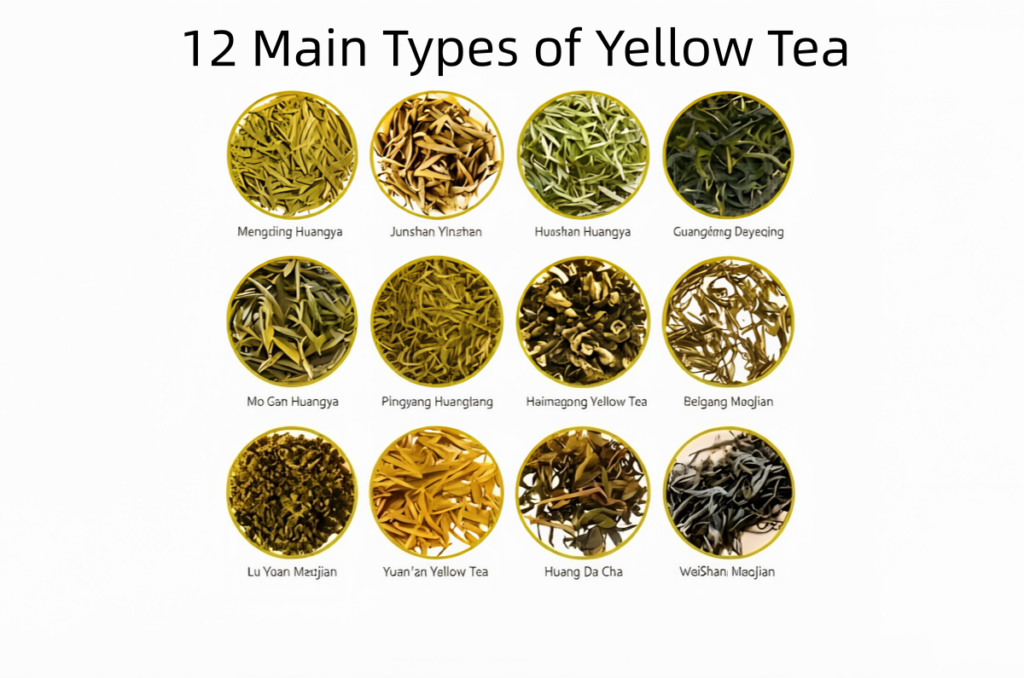
4. Top 10 Famous Chinese Yellow Teas: Full Sensory Breakdown
Each entry follows the standard six-dimension sensory evaluation system used in Chinese tea certification, covering appearance, dry color, liquor color, aroma, taste and infused leaf base.
4.1 Junshan Yinzhen (Junshan Silver Needle)
- Origin: Junshan Island, Dongting Lake, Yueyang, Hunan; early spring single-bud pluck before Qingming
- Appearance: Plump, straight needle-shaped single buds, uniform length, fine silver-white pekoe covering golden yellow bud body, known as “gold inlaid with jade”
- Dry Color: Bright golden-yellow bud base with silvery-white pekoe fuzz, glossy smooth surface
- Liquor Color: Pale apricot-yellow, crystal clear and luminous
- Aroma: Delicate fresh bud sweetness, soft chestnut undertone, clean long-lasting fragrance
- Taste: Smooth sweet umami, mellow and refreshing, zero bitterness, lingering honeyed aftertaste. Brewed buds stand upright in water and rise/fall three times, a famous visual signature
- Leaf Base: Tender uniform pale yellow buds, plump and soft, bright even color
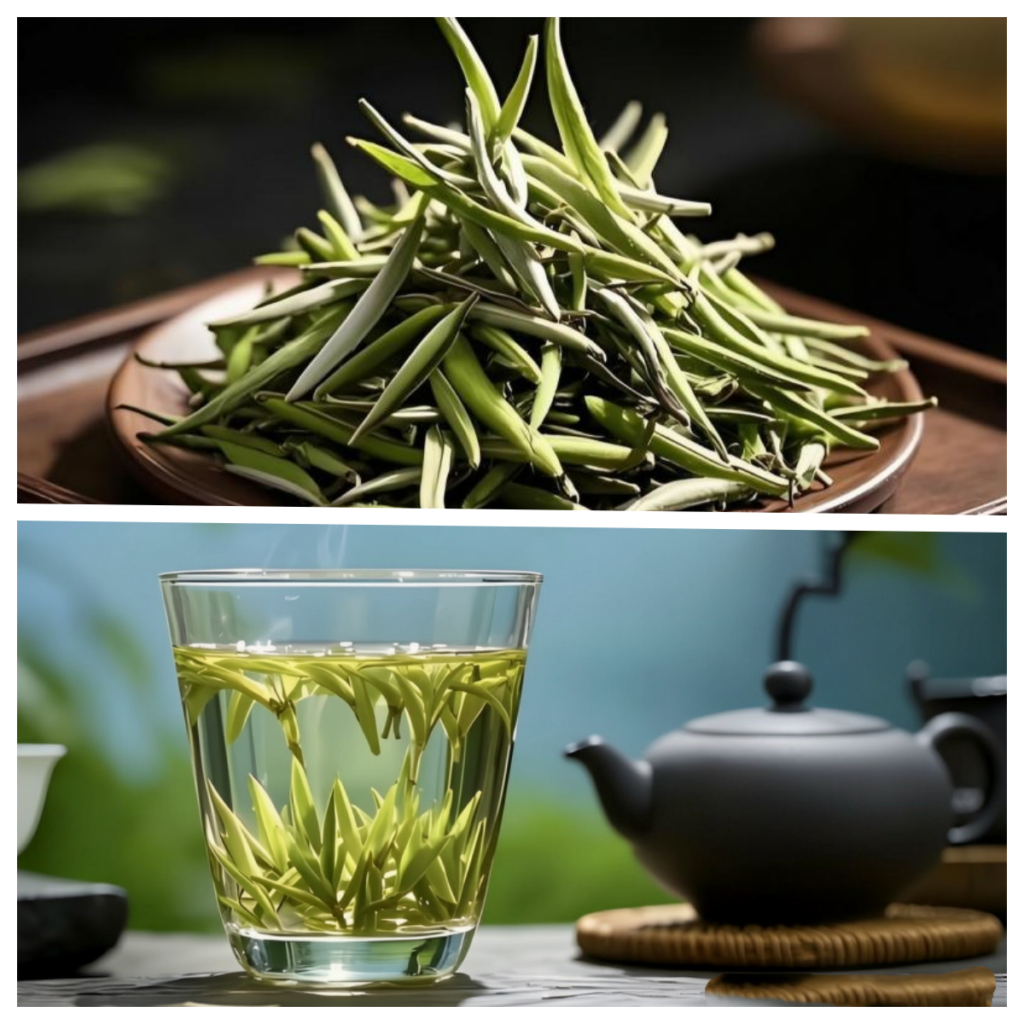
4.2 Mengding Huangya (Mengding Yellow Bud)
- Origin: Mengding Mountain, Ya’an, Sichuan; high-altitude early spring one-bud-one-leaf pluck
- Appearance: Flat, straight and evenly shaped bud-leaf sets, tightly pressed form, fine golden pekoe visible
- Dry Color: Warm yellowish-green, glossy moist surface, consistent yellow hue
- Liquor Color: Bright yellow-green, translucent with subtle golden sheen
- Aroma: Rich sweet chestnut fragrance, layered floral honey notes, deep lasting aroma
- Taste: Mellow thick sweetness, smooth round mouthfeel, fresh floral return sweetness, gentle stimulating effect
- Leaf Base: Uniform tender yellow-green bud-leaf sets, complete soft texture, even bright color
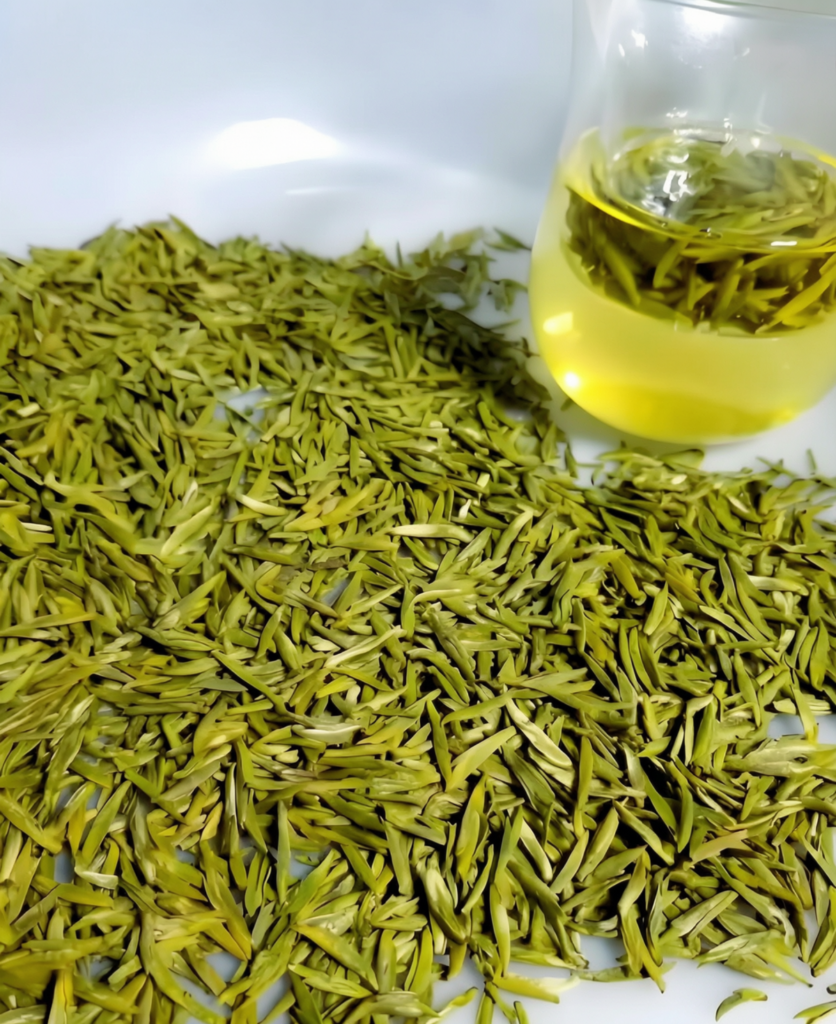
4.3 Huoshan Huangya (Huoshan Yellow Bud)
- Origin: Dabie Mountains, Huoshan County, Anhui; early spring one-bud-one-leaf to one-bud-two-leaf pluck
- Appearance: Sparrow-tongue shaped slightly open buds, natural slightly curled form, fine white pekoe
- Dry Color: Tender yellow-green, subtle frosted sheen from pekoe
- Liquor Color: Clear yellow-green, bright and transparent
- Aroma: Prominent roasted chestnut aroma, faint orchid floral top note, high and clean fragrance
- Taste: Fresh rich mellow sweetness, smooth texture, distinct long-lasting aftertaste, good brewing endurance
- Leaf Base: Tender bright yellow-green, evenly shaped buds and leaves, soft elastic texture
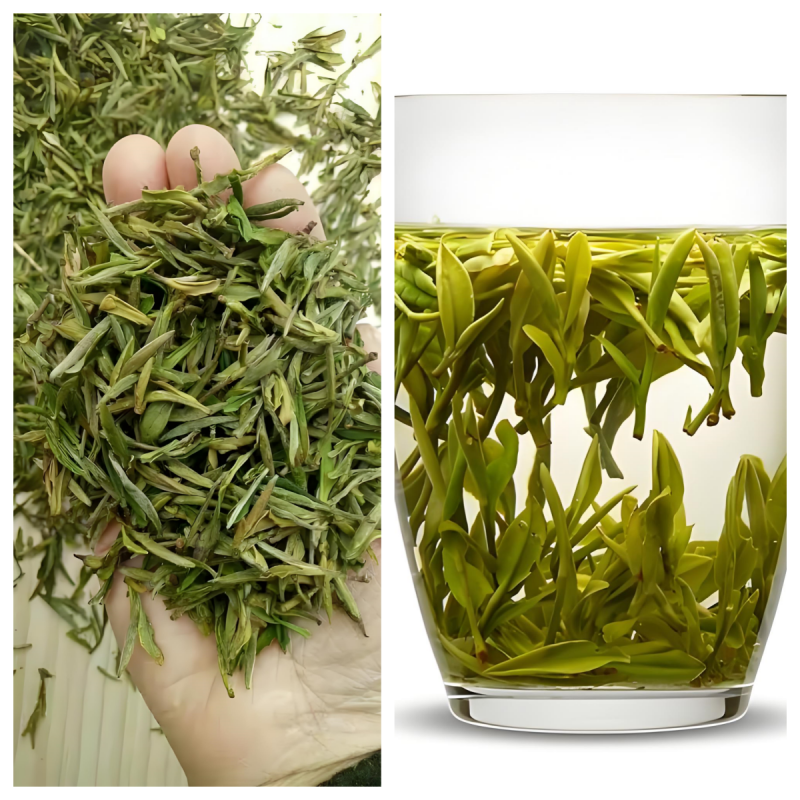
4.4 Beigang Maojian (Beigang Furry Tip)
- Origin: Beigang area, Yueyang, Hunan; one-bud-two to three-leaf spring pluck
- Appearance: Plump bud-leaf strips, visible golden hair tips, natural slightly curled shape
- Dry Color: Golden yellow hue, glossy surface, visible fine pekoe
- Liquor Color: Bright orange-yellow, clear and transparent
- Aroma: Refined high fragrance, sweet floral notes, clean pure aroma profile
- Taste: Mellow full-bodied sweetness, smooth taste with noticeable return sweetness
- Leaf Base: Plump tender yellow leaves, complete bud-leaf sets, shaped like blooming flowers
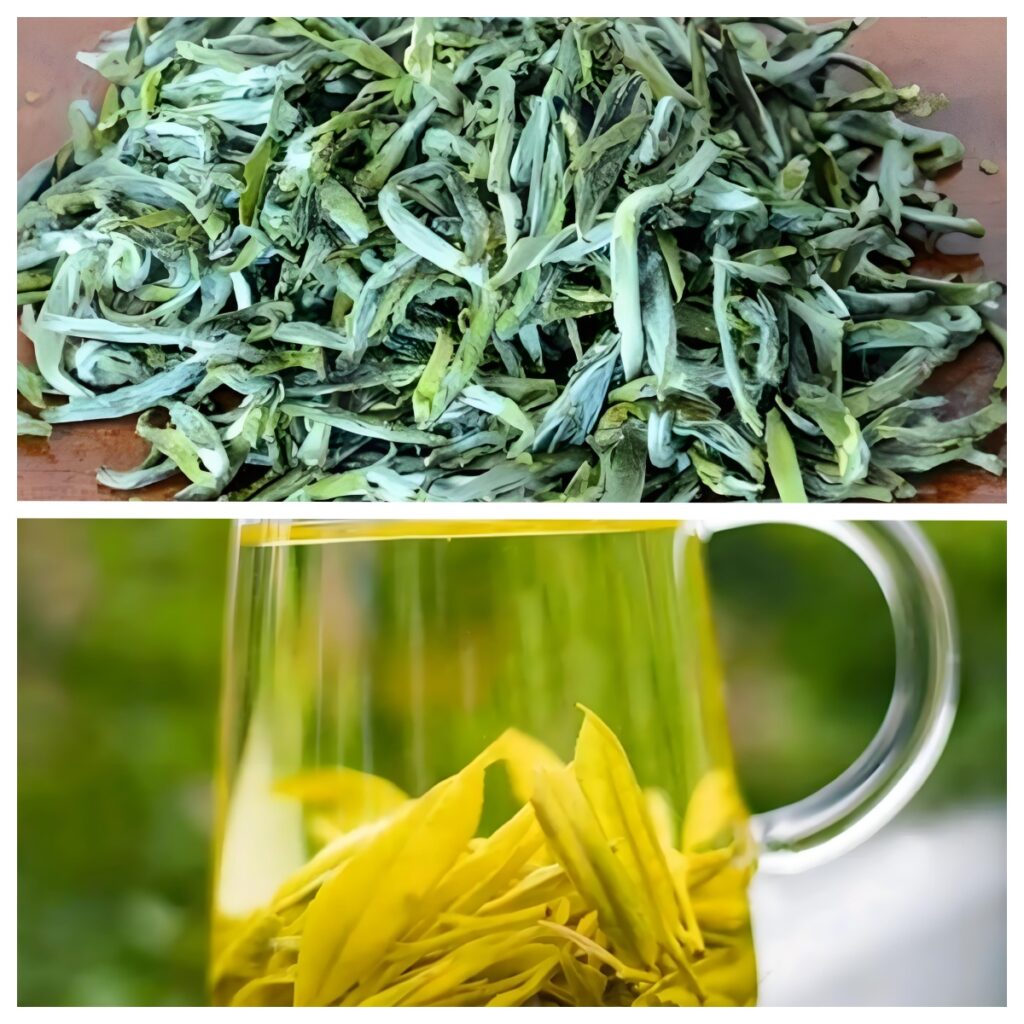
4.5 Weishan Maojian (Weishan Furry Tip)
- Origin: Weishan Mountain, Ningxiang, Hunan; high mountain foggy terroir, one-bud-two-leaf pluck
- Appearance: Slightly rolled small leaf shape, visible fine white pekoe, compact form
- Dry Color: Yellowish frosted green, soft matte finish
- Liquor Color: Bright orange-yellow, clear luminous texture
- Aroma: Smoky pine fragrance combined with sweet floral notes, unique layered aroma
- Taste: Mellow rich sweetness, thick mouthfeel, distinctive smoky-sweet character
- Leaf Base: Soft yellow-green leaves, uniform color, tender texture
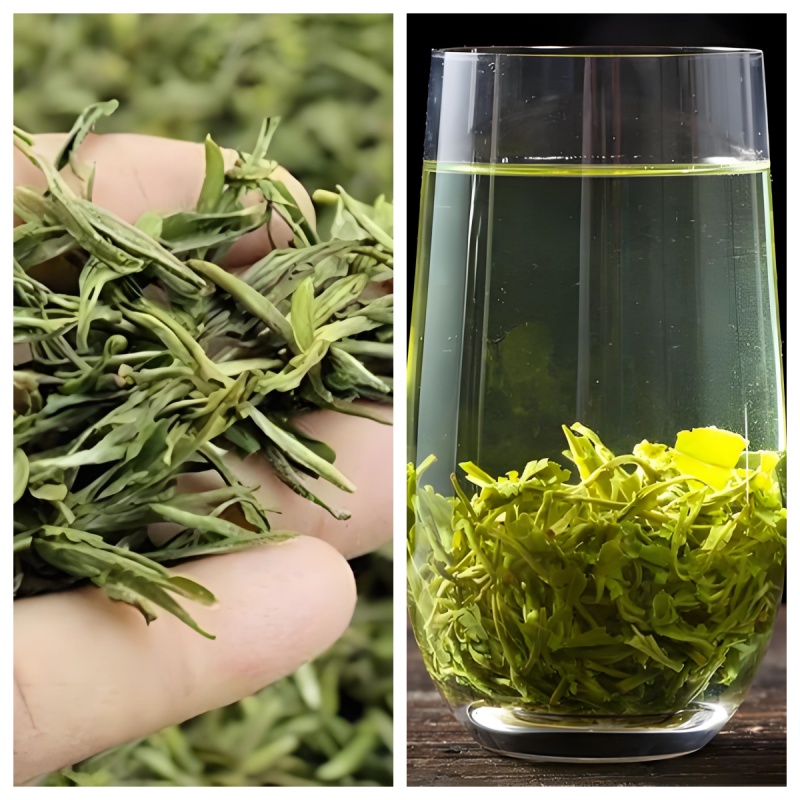
4.6 Pingyang Huangtang (Pingyang Yellow Soup)
- Origin: Pingyang County, Zhejiang Province; one-bud-one to two-leaf spring pluck
- Appearance: Fine slender leaf strips, tightly curled shape, thin visible pekoe
- Dry Color: Light yellow-green, even matte finish
- Liquor Color: Pale golden yellow, bright and clear
- Aroma: Fresh tender fragrance, light sweet corn and floral notes, clean delicate aroma
- Taste: Fresh mellow sweetness, light smooth body, refreshing clean finish
- Leaf Base: Tender bright yellow leaves, fine uniform leaf shape, soft texture
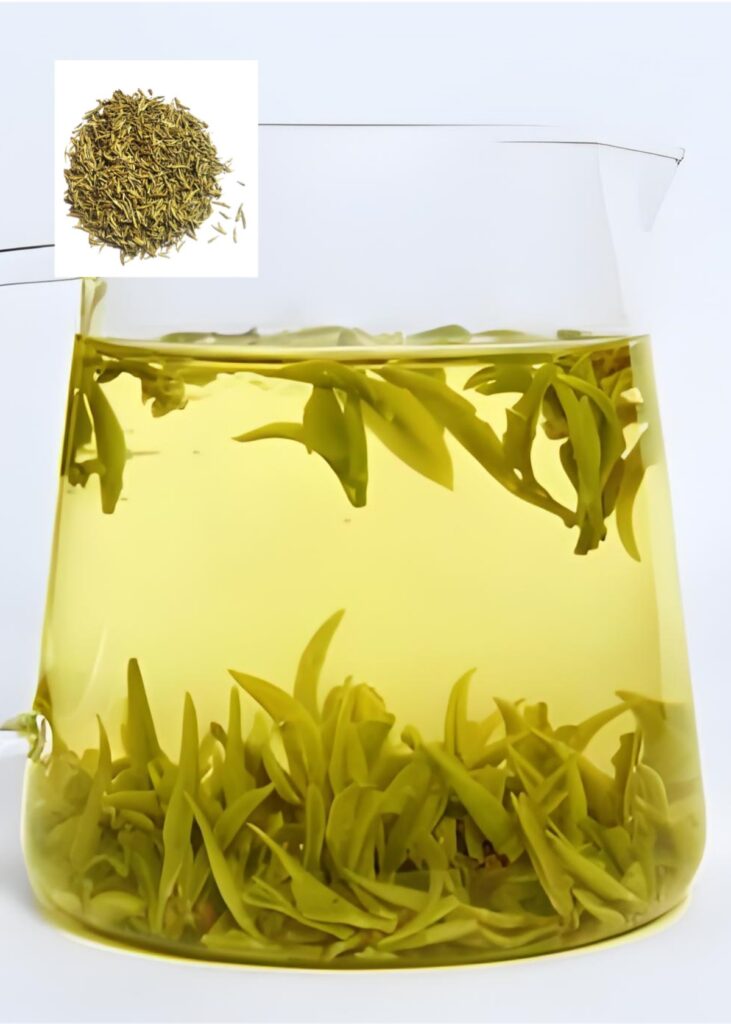
4.7 Yuan’an Yellow Tea
- Origin: Yuan’an County, Hubei Province; one-bud-two to three-leaf pluck
- Appearance: Ring-shaped curled leaf strips, uniform golden appearance, also called “golden ring tea”
- Dry Color: Glossy golden yellow, consistent even hue
- Liquor Color: Bright clear yellow, transparent and clean
- Aroma: Distinctive lasting orchid fragrance, sweet honey undertone
- Taste: Mellow smooth sweetness, refreshing long aftertaste, good brewing resistance
- Leaf Base: Tender yellow-green complete leaves, soft texture, even color
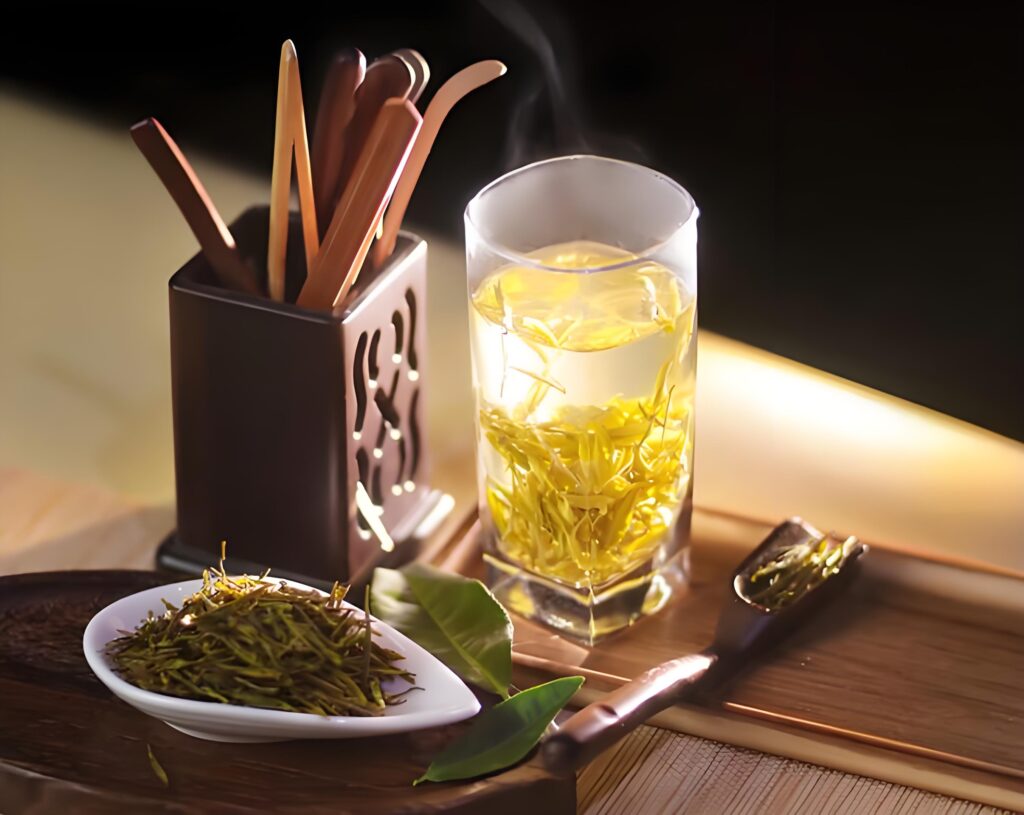
4.8 Guangdong Dayeqing (Guangdong Large Leaf Green)
- Origin: Guangdong Province; large-leaf tea cultivar, one-bud-three to four-leaf pluck
- Appearance: Thick plump curled leaf strips, heavy body, visible pekoe hairs
- Dry Color: Greenish-yellow with moist glossy surface
- Liquor Color: Deep orange-yellow, bright and clear
- Aroma: Pure rich tea aroma, sweet malt undertone
- Taste: Strong full-bodied mellow sweetness, smooth with return sweetness, highly brewable
- Leaf Base: Light yellow complete bud-leaf sets, large leaf size, full soft texture
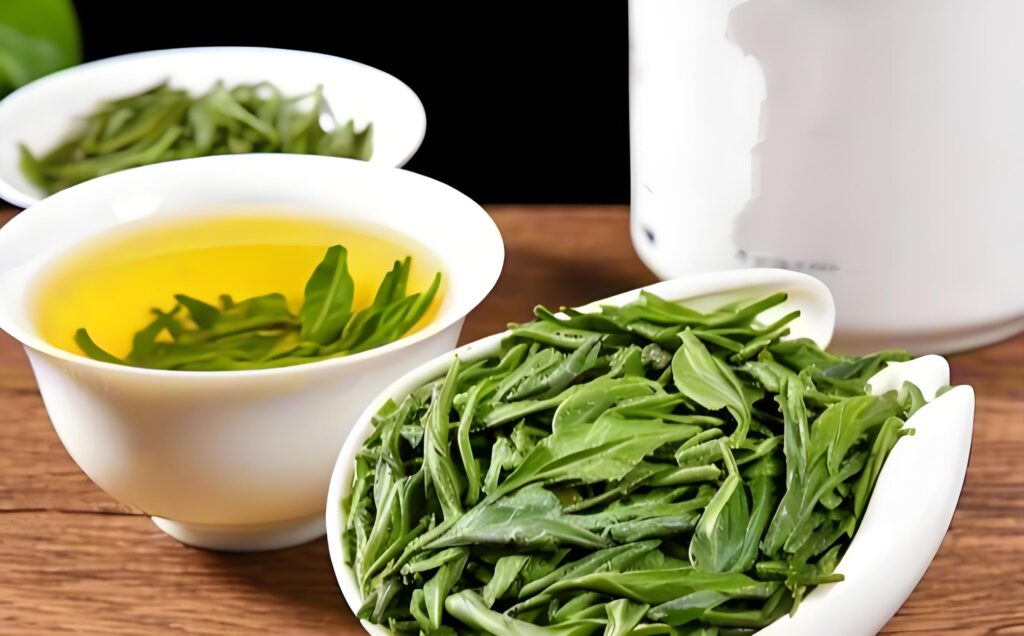
4.9 Huoshan Huangdacha (Huoshan Large Leaf Yellow Tea)
- Origin: Huoshan and Jinzhai, Anhui; one-bud-four to five-leaf mature pluck, long yellowing period
- Appearance: Thick stems with large leaves, stem-leaf connected shape resembling fish hooks, bold form
- Dry Color: Golden yellow with brownish undertones, glossy oiled appearance
- Liquor Color: Deep yellow with brownish tint, bright and transparent
- Aroma: Prominent roasted rice / crispy rice crust fragrance, high and long-lasting, signature “guoba aroma”
- Taste: Thick bold mellow flavor, strong rich body, highly brewable, deep warming mouthfeel
- Leaf Base: Yellow with brownish edges, thick leaves and sturdy stems, even color
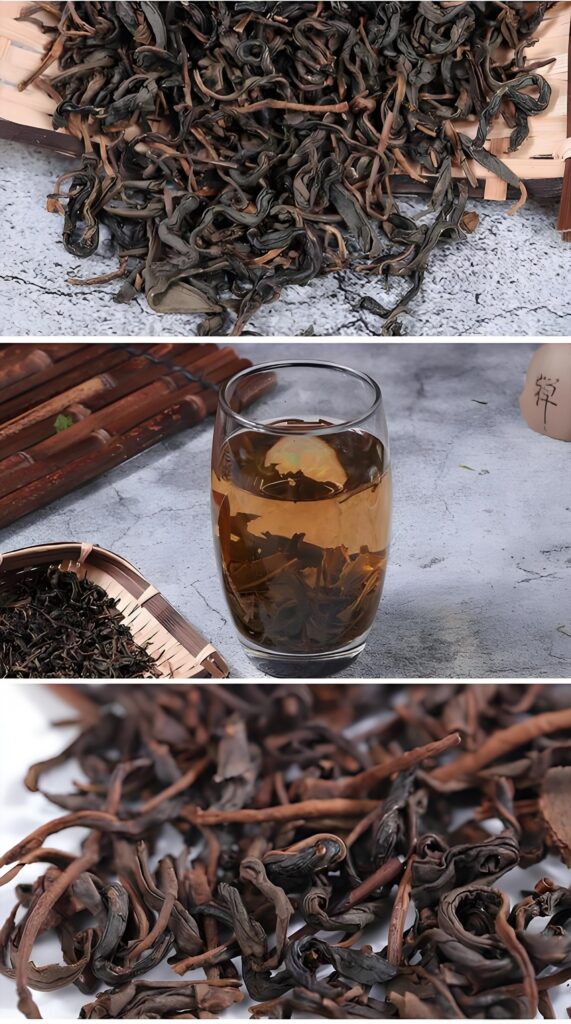
4.10 Haimagong Yellow Tea
- Origin: Haimagong Village, Guizhou Province; mountain terroir, one-bud-two to three-leaf pluck
- Appearance: Tightly curled fine leaf strips, visible fine pekoe, compact shape
- Dry Color: Yellowish-green with soft matte finish
- Liquor Color: Bright pale yellow, clear and clean
- Aroma: Gentle sweet chestnut fragrance, faint floral undertone
- Taste: Mellow smooth sweetness, light refreshing body, clean aftertaste
- Leaf Base: Tender yellow-green leaves, uniform shape, soft texture
5. Comparative Reference Table of Top 10 Chinese Yellow Teas
| Tea Variety | Core Origin | Primary Aroma Notes | Main Taste Characteristic | Best For |
| Junshan Yinzhen | Hunan Junshan Island | Chestnut, honey bud sweetness | Silky smooth umami, zero bitterness | Premium gifting, ceremonial brewing |
| Mengding Huangya | Sichuan Mengding Mountain | Chestnut, floral honey | Rich mellow sweet full body | Everyday premium drinking |
| Huoshan Huangya | Anhui Dabie Mountains | Roasted chestnut, orchid | Fresh rich sweetness, long aftertaste | Daily workday consumption |
| Beigang Maojian | Hunan Yueyang | Sweet floral, clean fragrance | Mellow full-bodied sweetness | Casual all-day drinking |
| Weishan Maojian | Hunan Weishan Mountain | Pine smoke, sweet floral | Smoky-sweet mellow depth | Flavor exploration |
| Pingyang Huangtang | Zhejiang Pingyang | Sweet corn, delicate floral | Fresh light smooth sweetness | Light tea preference |
| Yuan’an Luyuan | Hubei Yuan’an | Orchid, honey | Mellow smooth, highly brewable | Afternoon tea sessions |
| Guangdong Dayeqing | Guangdong | Malt, rich tea aroma | Strong bold mellow sweetness | Bold flavor lovers |
| Huoshan Huangdacha | Anhui Huoshan | Crispy rice crust, roasted | Thick bold warming flavor | Cold weather, hearty drinking |
| Haimagong Tea | Guizhou | Gentle chestnut, faint floral | Mellow light refreshing sweetness | Gentle daily drinking |
6. Frequently Asked SEO FAQ Section
Q1: What makes yellow tea different from green tea?
Yellow tea adds a controlled men-huang (yellowing) step after 杀青 that lightly ferments the leaves through heat and moisture. This reduces astringency, softens the flavor and creates the signature yellow color, making yellow tea gentler on the stomach than green tea.
Q2: Which yellow tea is best for beginners?
Huoshan Huangya and Pingyang Huangtang are ideal for beginners, offering balanced sweet flavor, low bitterness and approachable price points. Junshan Yinzhen represents the highest grade but comes at a premium price.
Q3: Does yellow tea have caffeine?
Yes, yellow tea contains caffeine, generally at slightly lower levels than green tea due to the yellowing process. It also contains L-theanine that moderates caffeine release for steady alertness without jitters.
Q4: How should I brew authentic yellow tea?
Use 80–85°C water for bud-grade yellow teas and 85–90°C for leaf-grade varieties. Use 3–5 grams of tea per 150ml water, and infuse for 30–60 seconds, extending steeping time for subsequent brews.
7. Brewing & Storage Tips for Chinese Yellow Tea
1.Water temperature guide: 80°C for single-bud teas like Junshan Yinzhen; 85°C for yellow bud teas; 90°C for large-leaf yellow teas to extract full flavor
2.Storage method: Keep yellow tea sealed in an airtight tin or foil bag, store in a cool, dark and dry place, avoid strong odors and direct sunlight. Yellow tea is best consumed within 18 months of harvest for optimal aroma
3.Cold brew option: Yellow bud teas steeped 4–6 hours in cold water produce smooth, sweet low-caffeine summer beverages with preserved floral sweetness