

What Is Gongfu Tea?
If you have ever visited southern China and watched locals gather around a tiny wooden tea tray, pouring amber tea liquor into thumb-sized cups, you’ve witnessed Gongfu Tea — China’s most beloved daily tea ritual, also officially named Chaozhou Gongfu Tea Art, a UNESCO-listed Intangible Cultural Heritage of Humanity.
Many overseas tea newcomers carry two common misunderstandings: First, they think Gongfu Tea is a single type of tea. Second, they confuse the “gongfu” in its name with martial arts Kung Fu. Neither statement is correct.
Literally translated, Gongfu (工夫 / 功夫) means skill, patience, and precise manual effort; Cha (茶) means tea. Gongfu Tea refers to a specialized brewing craft built on careful, repeated practice, not a tea category. It works with nearly all six major Chinese teas, but oolong, aged white tea, ripe dark Pu-erh, and full-bodied black tea are its perfect matches.
Rooted in the Chaoshan region of Guangdong Province over 300 years ago, this ritual evolved from ancient Ming and Qing dynasty tea customs. In 2008, it was listed as China’s national intangible cultural heritage; in 2022, it joined UNESCO’s global heritage roster as a core part of China’s traditional tea culture. Unlike the rigid, solemn Japanese tea ceremony, Gongfu Tea is warm, casual, and rooted in everyday hospitality — every family in Chaoshan keeps a mini tea tray at home to welcome friends and relatives.
1. Core Differences: Gongfu Brewing vs. Standard Western Tea Making
The biggest flavor gap between Chinese gongfu tea and Western mug brewing comes down to four core rules, laid out clearly in this comparison table:
| Feature | Gongfu Tea Brewing | Western Standard Mug Brewing |
| Leaf-to-Water Ratio | High concentration: 5–8g loose leaves for a 100–150ml vessel (fills ½–⅔ of the pot/gaiwan) | Low concentration: 1–3g leaves for 240–350ml large mugs |
| Steeping Method | Multiple ultra-short infusions (5–45 seconds per round; 6–12 full pours from one batch of leaves) | One single long steep (3–5 minutes, one serving only) |
| Teaware Size | Mini 100–150ml gaiwan/Yixing pot + tiny 10–25ml tasting cups | Large 300ml+ mugs or big teapots |
| Core Goal | Unlock evolving layered flavors (floral → fruity → roasted mineral across steeps) | Create one consistent, mild drink for fast consumption |
| Best Tea Matches | Oolong, aged white tea, raw/ripe Pu-erh, heavy black tea | Light green tea, bagged breakfast black tea, herbal infusions |
Gongfu brewing’s biggest advantage: It lets you taste the full life cycle of tea leaves. The first pour releases bright top-note aromas like peach and orchid; middle steeps bring rich caramel, honey, or chocolate sweetness; late infusions deliver soft, lingering mineral and dried fruit notes you could never extract with a single long western steep.
2. Essential Gongfu Tea Equipment (Beginner Minimal Set)
You do not need an elaborate luxury kit to start gongfu tea. This minimal 5-piece set covers all core steps, ideal for new practitioners:
1.Gaiwan (Porcelain Lidded Bowl, 100–150ml) The most universal brewing vessel for beginners. Neutral porcelain does not absorb tea flavors, so you can switch between green, oolong, and Pu-erh without cross-contamination. Easy to clean and control steeping speed. Alternative: Small Yixing purple clay teapot, best reserved for single tea types (clay absorbs aroma and builds unique tea character over time).
2.Fairness Pitcher (Gong Dao Bei) Equalizes tea concentration before serving. After pouring liquor from the gaiwan, transfer it to the pitcher to balance strong and weak layers — this ensures every guest gets identical flavor, no bitter uneven cups.
3.Small Tasting Cups (Pin Ming Bei) Tiny 10–25ml porcelain cups for concentrated sips. Small volume lets you fully smell and taste the tea without over-drinking, while retaining warm liquor temperature.
4.Bamboo Tea Scoop & Tea Tongs Scoops measure dry tea leaves; tongs safely handle hot cups and avoid touching tea with bare hands (traditional hygiene etiquette).
5.Bamboo Tea Tray Catches spilled hot water during warming and rinsing steps to keep your table clean.
Optional Advanced Tools
Aroma cups (to smell dry/wet tea fragrance), tea strainers, storage jars for loose leaf tea.
3. Step-by-Step Gongfu Tea Brewing Tutorial (For All Skill Levels)
This simplified 7-step workflow adapts the classic Chaozhou 21-step ritual for home beginners, with temperature guides for each major tea type.
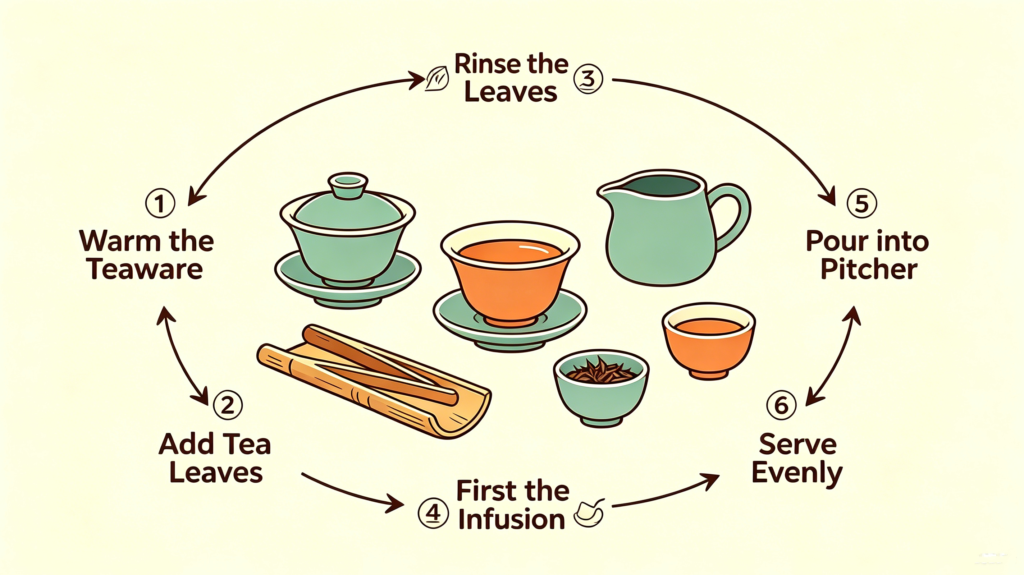
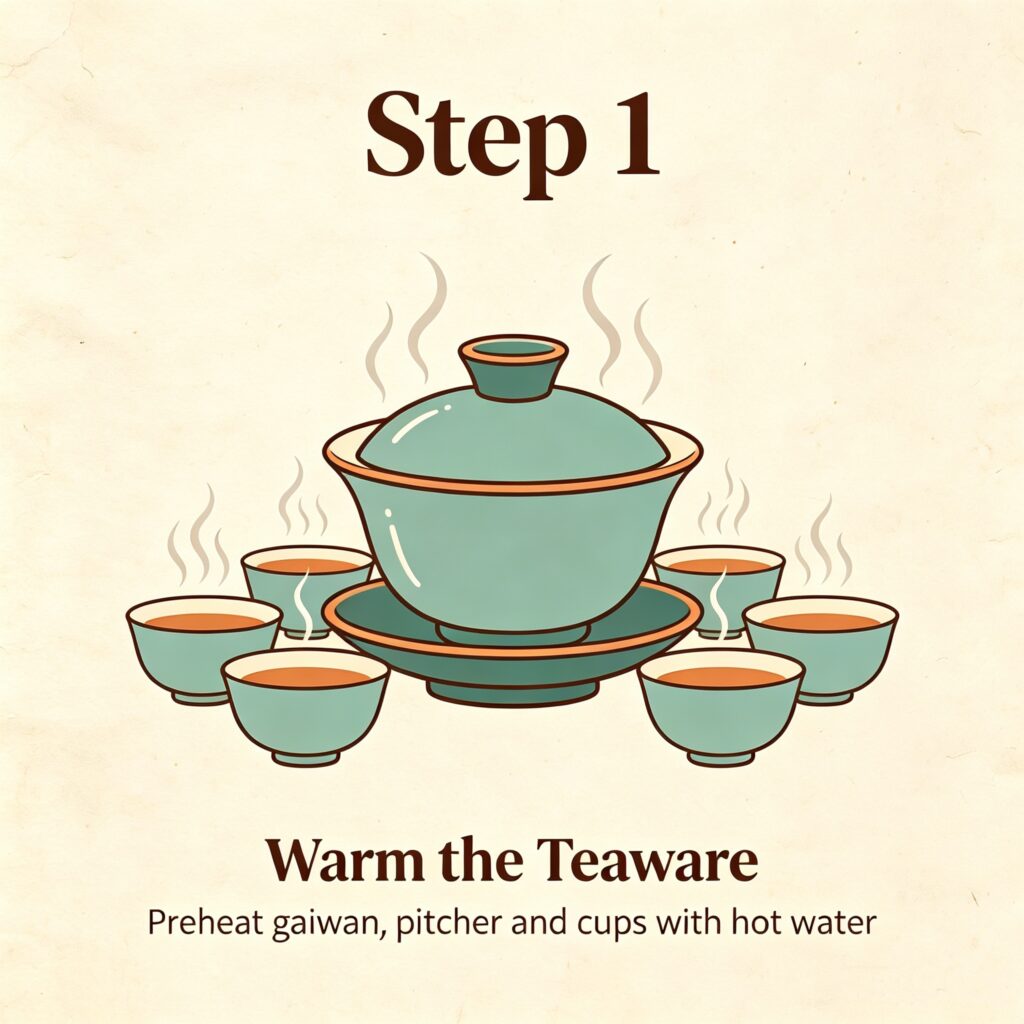
Step 1: Warm All Teaware (Critical Base Step)
Pour boiling hot water into your gaiwan, fairness pitcher, and tasting cups, swirl to coat every surface, then pour all waste water into the tea tray. Purpose: Cold ceramic instantly drops water temperature, ruining aroma extraction. Warming locks in the tea’s delicate fragrance before adding leaves.
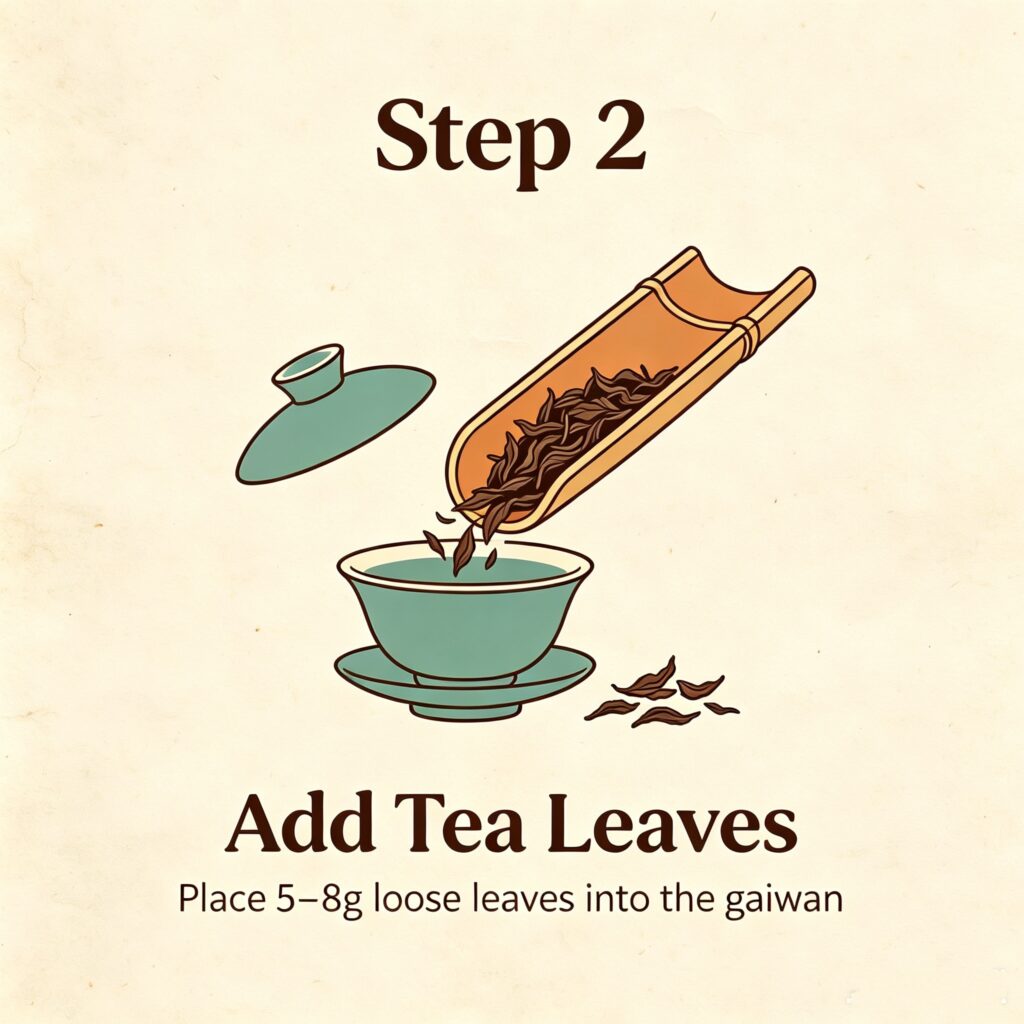
Step 2: Measure & Add Dry Tea Leaves
Add 5–8g loose tea to your pre-warmed gaiwan. Close the lid and gently shake the vessel for 2–3 seconds to inhale the dry leaf aroma — this is the first sensory pleasure of gongfu tea. Ratio rule reference: 5g for light rolled oolong; 7–8g for compressed Pu-erh, roasted rock tea, or aged white tea.
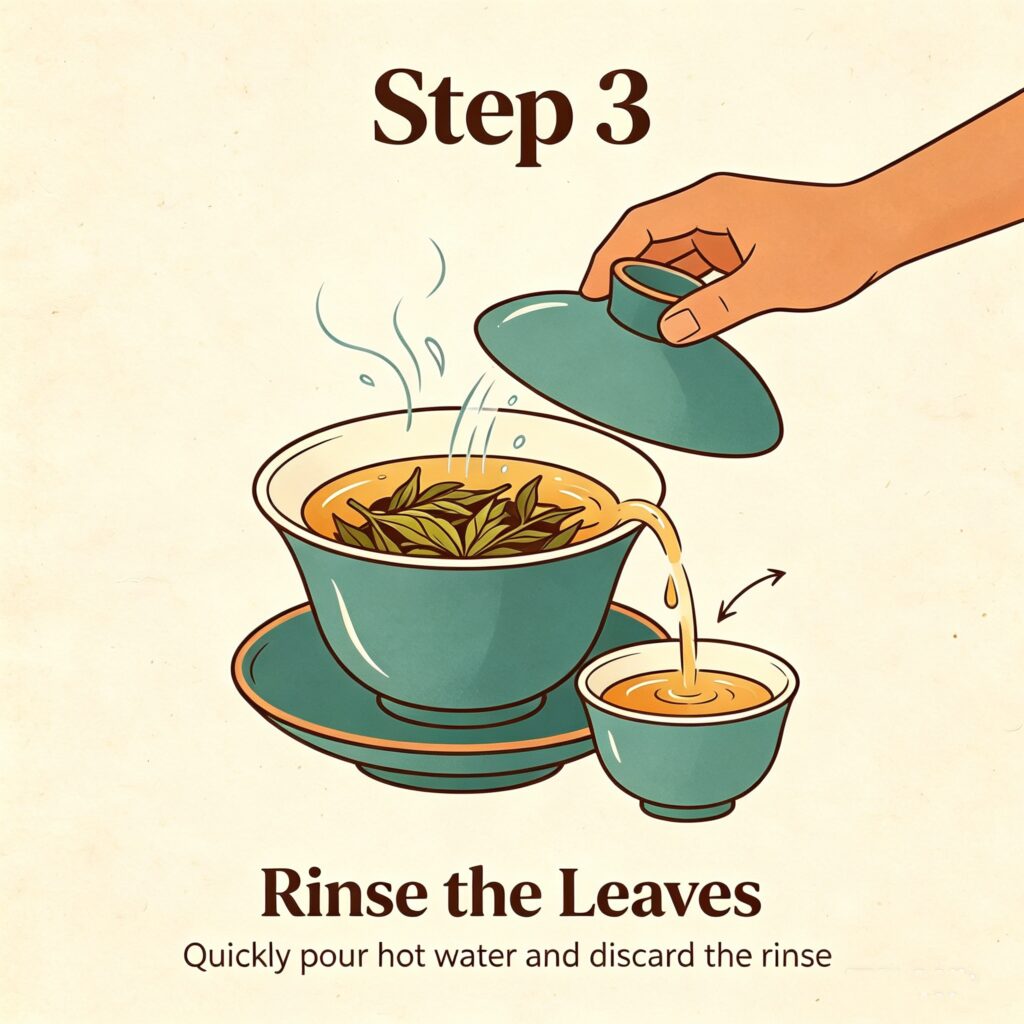
Step 3: Wake & Rinse the Tea Leaves
Pour hot water over the leaves until the gaiwan overflows slightly, then pour all liquid out immediately (no steeping). This is called “washing tea”.
Light oolong / young white tea: 1 quick rinse only
●Aged raw Pu-erh / tightly rolled heavy rock tea: 2 fast rinses Purpose: Opens compressed tea buds, washes natural leaf dust, and activates aromatic compounds inside leaves for richer future infusions. Discard rinse water — it is not for drinking.
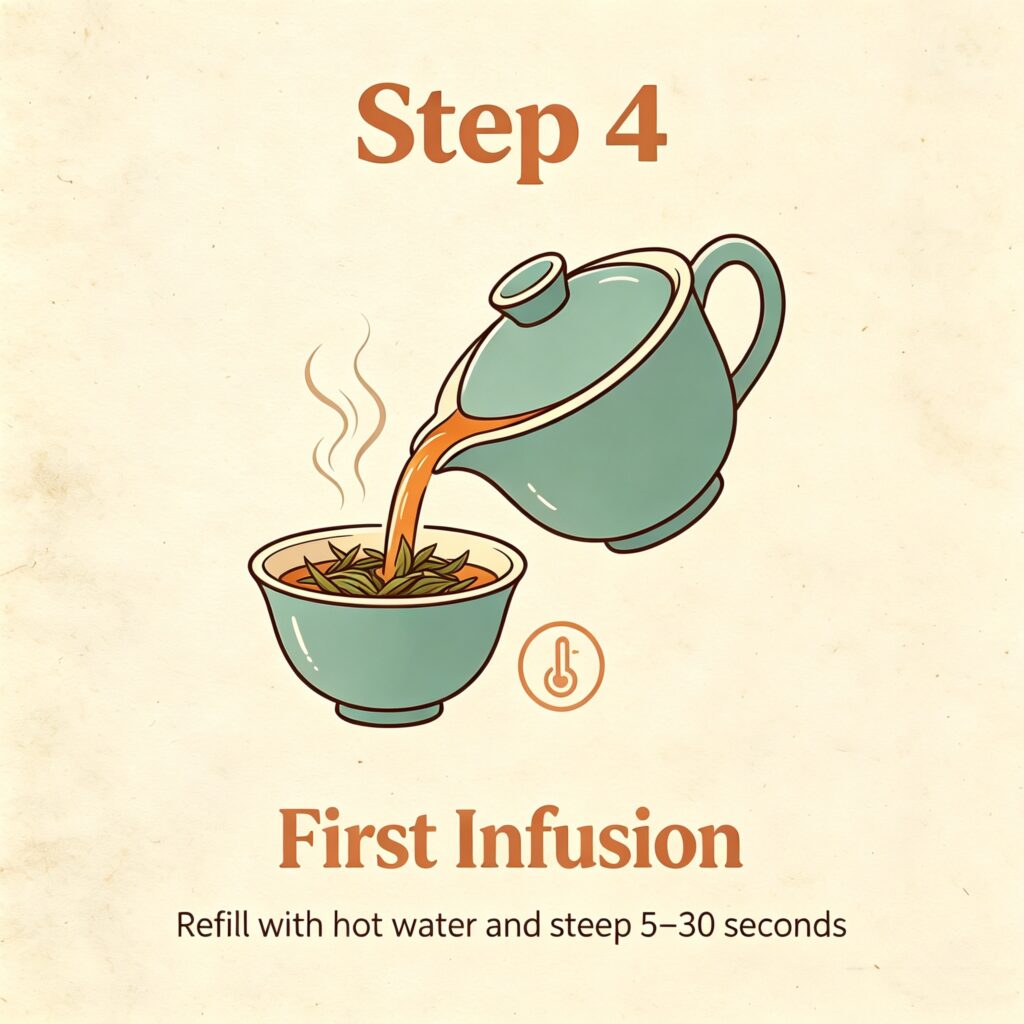
Step 4: First Official Infusion (Adjust Water Temperature By Tea)
Refill the gaiwan with temperature-matched hot water, put the lid on tight, and steep for the base time listed below:
●Light floral oolong (Tieguanyin): 88–92°C water, steep 5–10 seconds
●Roasted Wuyi rock tea / Dian Hong black tea: 95–100°C boiling water, steep 10–20 seconds
●Aged white Shou Mei: 90–95°C water, steep 15–25 seconds
●Raw/Ripe Pu-erh: Full boiling 100°C water, steep 20–30 seconds
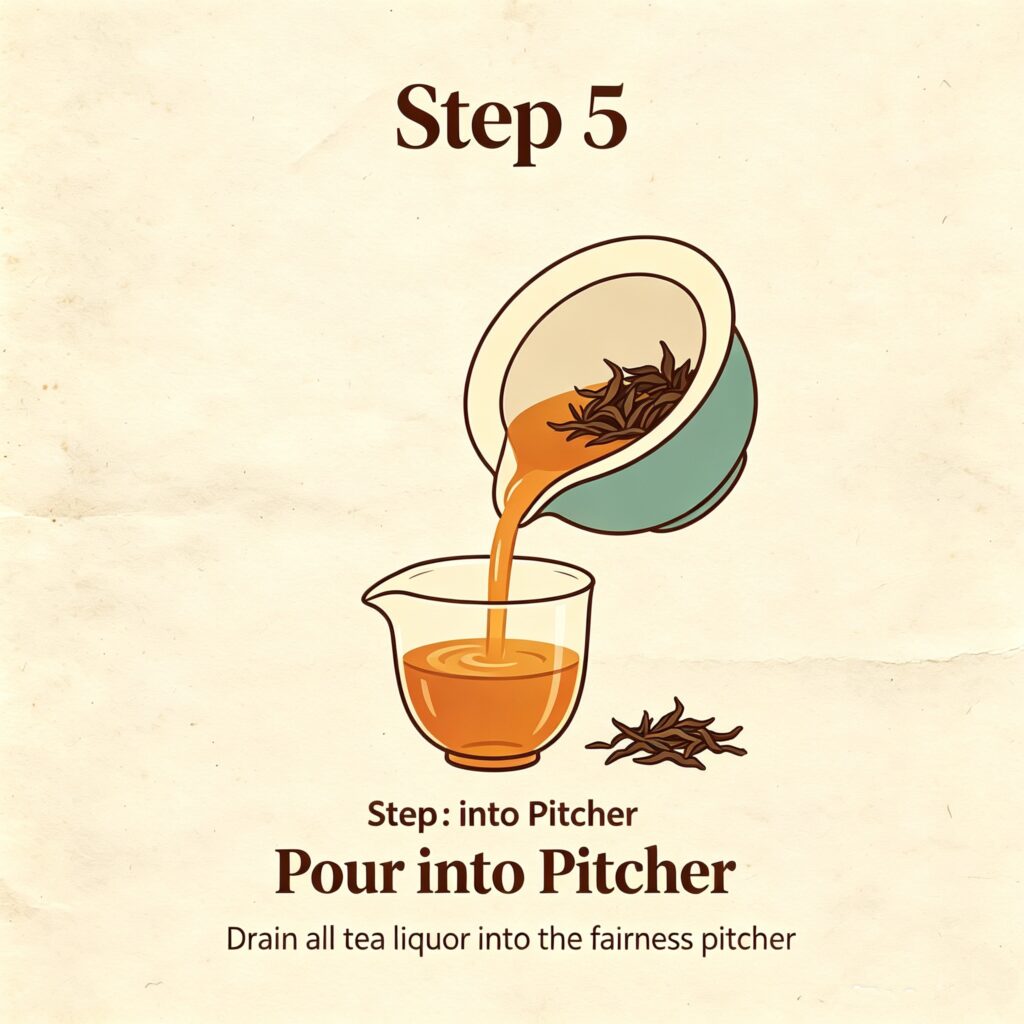
Step 5: Pour Evenly Into the Fairness Pitcher
Tilt the gaiwan to pour all liquor into the pitcher — do not leave liquid trapped with the leaves, or they will over-steep and turn bitter. The traditional pouring art here is named “Guan Gong Patrols The City”: Move your wrist side-to-side slowly to release balanced tea liquor, followed by “Han Xin Points Troops” to split the last drops evenly across every cup. This ancient gesture embodies equality and respect for guests.
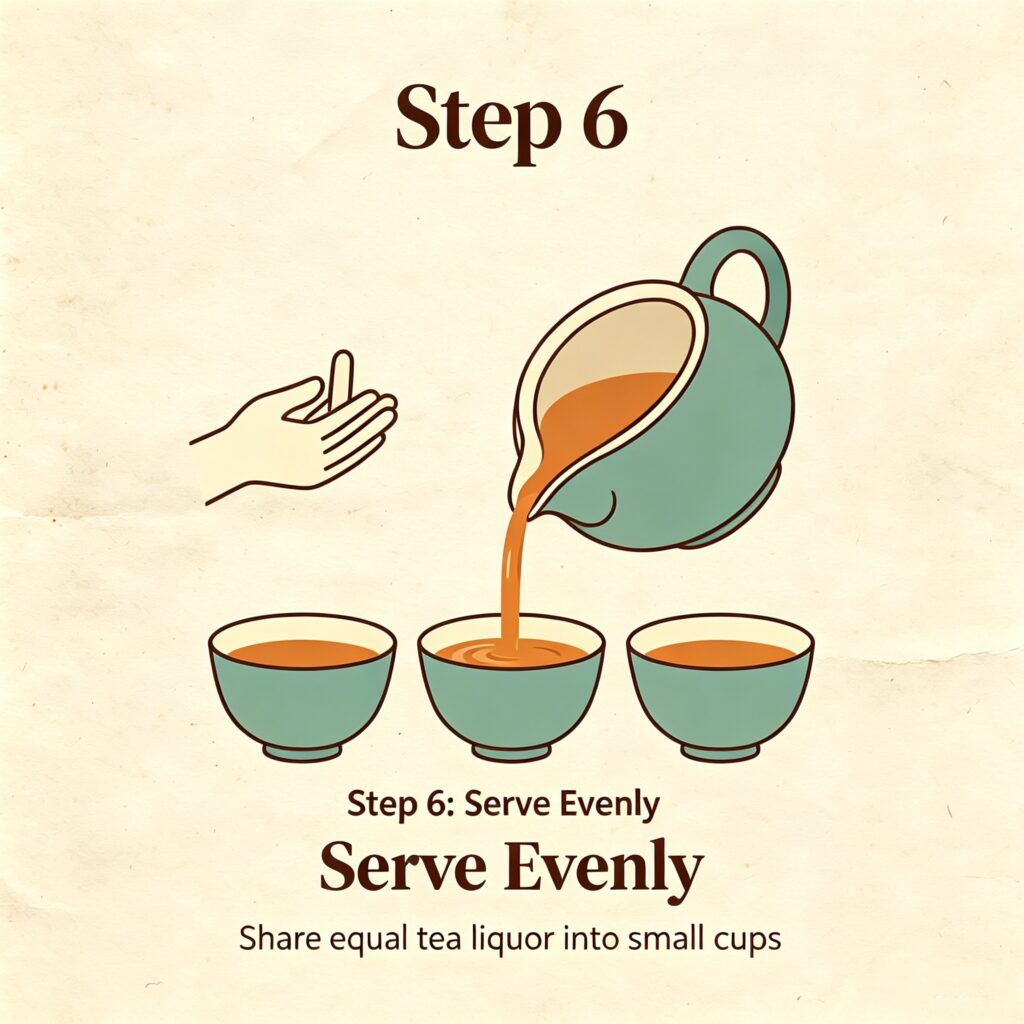
Step 6: Serve Tea to Taste
Distribute liquor from the fairness pitcher into small tasting cups. Sip slowly in three small mouthfuls: first inhale the aroma above the cup, then taste the front flavor, and finally notice the sweet lingering aftertaste (huigan) left on your tongue.
Step 7: Repeat Infusions, Extend Steep Time Gradually
For every subsequent pour, add 5–15 extra seconds of steeping time as leaves slowly release their flavors. A good batch of oolong can produce 8–12 distinct flavorful rounds before fading.
4. Cultural Meaning of Gongfu Tea: More Than Just Brewing
Gongfu Tea is deeply woven into southern Chinese social culture, carrying three core spiritual values:
Hospitality & Respect
In Chaoshan culture, preparing gongfu tea for visitors is the most sincere welcome. Hosts always serve tea to elders or guests first before drinking themselves, a quiet expression of politeness and care. Unlike formal dinner parties, tea time lowers social barriers — friends, family, and even business partners connect naturally over shared small cups.
Mindful Slow Living
The repetitive, gentle motions of warming, rinsing, pouring, and smelling tea act as daily meditation. In fast-paced modern life, the 10–15 minutes spent on gongfu brewing forces people to pause, focus on the present moment, and appreciate small sensory joys instead of rushing through tasks. The word “gongfu” mirrors martial arts philosophy: mastery only comes from slow, consistent, careful practice.
Intergenerational Heritage
Gongfu tea skills pass down through families from childhood. Children in Chaoshan learn to brew alongside their grandparents, carrying forward oral tea knowledge, local customs, and the UNESCO-listed craft to new generations. It is not just a hobby, but a living cultural memory of southern China.
5. FAQ for Gongfu Tea Newbies
Q1: Can I brew green tea with Gongfu style?
A: Not recommended for young delicate green teas like Longjing or Biluochun. High heat and repeated fast infusions extract harsh bitter tannins and destroy their soft fresh grassy aroma. Green tea tastes best with a simple glass mug and 75–85°C single short steep. Aged heavy white tea is the only light category suitable for gongfu brewing.
Q2: Do I need expensive Yixing clay pots to practice Gongfu Tea?
A: Absolutely not. Porcelain gaiwans are cheaper, beginner-friendly, and work for all tea varieties. Yixing pots are an optional upgrade for tea enthusiasts who only brew one specific oolong or Pu-erh every day.
Q3: Why does Gongfu Tea use tiny cups instead of big mugs?
A: Gongfu tea liquor is highly concentrated from heavy leaf ratios. Small cups let you sample multiple flavor evolutions across 10+ infusions without over-consuming caffeine or strong tannins. Tiny vessels also keep tea warm between pours and amplify aroma perception when sipping.
Q4: Is Gongfu Tea the same as Japanese tea ceremony?
A: They share reverence for tea, but differ completely in tone and purpose. Japanese tea ceremony is highly formalized, focused on strict ritual discipline. Gongfu Tea is casual, daily, and prioritizes exploring tea’s natural flavors while socializing with others — it fits on home dining tables every single day.
Q5: How do I avoid bitter gongfu tea?
Three simple fixes:
1.Pour out all liquor fully after each steep (never leave leaves soaking in water)
2.Shorten initial steeping times to 5–10 seconds for floral oolongs
3.Do not use fully boiling water for young white or lightly oxidized tea
Closing
Gongfu Tea is far more than a brewing technique — it is a window into relaxed Chinese tea culture. You do not need perfect skill or luxury gear to begin; all you require is a small gaiwan, quality loose leaf tea, and a few minutes of quiet focus.
If you enjoy layered, evolving flavors hidden within one batch of tea leaves, gongfu brewing will completely transform how you experience Chinese oolong, white tea, and Pu-erh. Next time you prepare tea, slow down, follow the simple gongfu steps, and taste the subtle art built from hundreds of years of Chinese tradition.