

According to classic Chinese tea literature and modern expert research, dark tea (hei cha) is China’s unique post-fermented tea category and one of the six major tea families, distinguished by its microbial pile-fermentation process and “better with age” character. Unlike Western “black tea” (called red tea in China), dark tea undergoes secondary microbial fermentation after initial processing, creating rich earthy flavors and unique functional compounds such as theabrownins. This guide covers the full cultural history, terroir diversity, craftsmanship and health properties of authentic Chinese dark tea, helping global tea enthusiasts identify premium regional dark teas and master proper brewing and aging methods.
一、Origin & History
The earliest form of dark tea dates back to the Tang Dynasty (618–907 AD), when compressed tea cakes were transported along the Ancient Tea-Horse Road to Tibet and northwest China. Long transportation times and humid mountain climates caused natural fermentation of green tea cakes, giving birth to the earliest dark tea prototypes. By the Song Dynasty, the imperial government established the Tea-Horse Agency to regulate dark tea trade, using tea to exchange war horses from western regions, making dark tea a strategic national commodity.
In the Ming Dynasty, the formal pile-fermentation (wo dui) craftsmanship was created in Anhua, Hunan, marking the official birth of standardized dark tea production. Anhua dark tea was designated as official tribute tea for border regions. During the same period, Jingyang Fu Brick Tea in Shaanxi developed its signature “golden flower” fermentation craft, becoming a core commodity on the Silk Road. By the Qing Dynasty, Yunnan Pu-erh tea and Guangxi Liu Pao tea flourished, with Liu Pao tea exported across Southeast Asia via overseas Chinese communities.
二、 Growing Regions & Terroir
Chinese dark tea production spans six major provinces, each with unique climate, altitude and cultivar characteristics that shape distinct regional flavor profiles:
Yunnan Province — Birthplace of Pu-erh tea. High-altitude ancient tea mountains in Xishuangbanna, Lincang and Pu’er city produce large-leaf sun-dried green tea, the raw material for Pu-erh. Abundant rainfall and large day-night temperature differences create rich tea polyphenol content, ideal for long-term aging.
Hunan Province — Core dark tea region centered in Anhua County. Xuefeng Mountain terroir with cloudy, humid conditions produces medium-leaf tea cultivars ideal for Fu brick, Qianliang and Tianjian dark teas. Local pine wood roasting creates signature woody and smoky notes.
Guangxi Zhuang Autonomous Region — Home to Liu Pao tea in Cangwu County, Wuzhou. Subtropical humid climate and local mountain cultivars produce dark tea with distinctive betel nut and aged wood aroma, famous for its digestive benefits among overseas Chinese.
Sichuan Province — Ya’an Tibetan tea and Qionglai dark tea production zones. Western Sichuan plateau edge terroir with high humidity produces the oldest dark tea varieties, historically supplied to Tibetan regions via the Tea-Horse Road.
Shaanxi Province — Jingyang Fu brick tea origin. Located on the ancient Silk Road, local artisans developed the unique “golden flower” (Eurotium cristatum) fermentation craft, making it a historically prized tea along the trade route.
Hubei Province — Green brick tea production centered in Xianning and Yichang. Laoqing tea raw material produces compressed brick tea with rich aged wood aroma, historically supplied to Inner Mongolia and northwest regions.
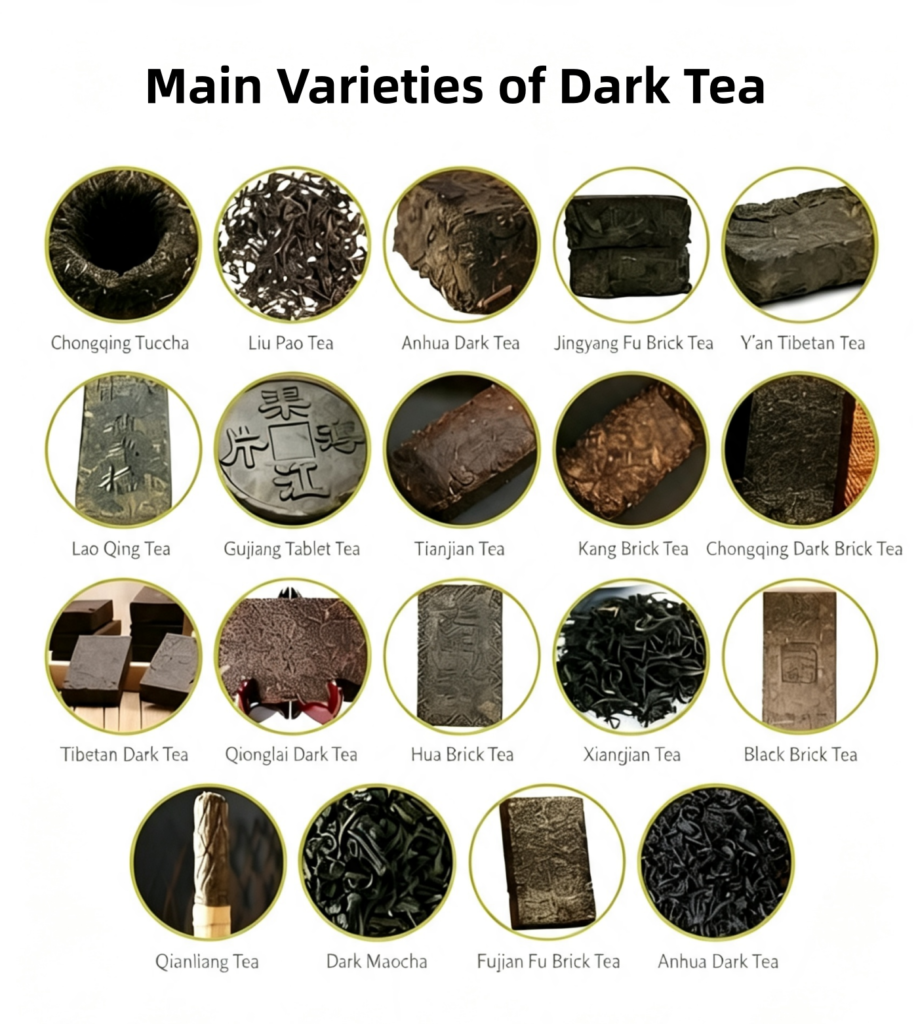
三、 Core Processing Method
Dark tea’s unique character comes from its post-fermentation production flow, which differs significantly from all other tea categories:
Fixation (Sha Qing) — High-heat pan roasting deactivates oxidative enzymes in fresh leaves, preserving base tea compounds and stopping enzymatic oxidation.
Rolling — Mechanical rolling breaks leaf cell walls, releasing tea juices and forming the base for microbial fermentation.
Pile Fermentation (Wo Dui) — Core Step — Tea leaves are piled into 1–2 meter high stacks under controlled temperature and humidity for 10–60 days. Naturally occurring microbes including Aspergillus niger and yeast break down tea polyphenols, producing theabrownins and creating dark tea’s signature mellow, aged flavor with reduced astringency.
Drying — Sun drying or baking removes excess moisture and stabilizes tea quality. Many regional dark teas use pine wood baking to add distinctive woody aroma.
Compression — Steamed soft tea leaves are pressed into bricks, cakes, pillars or other shapes, convenient for transportation and long-term aging.
Golden Flower Fermentation (Fa Hua) — Fu Brick Exclusive — A 15–20 day constant-temperature humidity process that cultivates Eurotium cristatum (golden flower) probiotic fungi inside compressed tea bricks, creating signature fungal aroma and enhanced digestive benefits.
Aging — Properly stored dark tea continues slow natural fermentation over years, developing richer, smoother flavor and increasing functional compound content.
四、General Sensory Characteristics of Dark Tea
Appearance: Mostly compressed into bricks, cakes, pillars or bamboo-wrapped rolls; loose-leaf dark tea has thick, sturdy leaf strips with visible stems.
Dry Color: Deep dark brown to blackish-brown, with glossy oily sheen on premium grades; aged tea develops richer reddish-brown tones.
Liquor Color: Deep orange-red to chestnut brown, clear and luminous; high-quality aged dark tea shows thick, oily texture with golden rim.
Aroma: Dominated by aged wood, pine smoke, earthy and medicinal notes; premium varieties carry floral, honey or betel nut undertones; Fu brick tea has distinctive golden flower fungal aroma.
Taste: Mellow, thick and smooth, with sweet aftertaste and no harsh bitterness; aged dark tea delivers silky mouthfeel and long-lasting sweet finish.
Leaf Base: Yellowish-brown to dark brown, thick and soft leaves with visible stems; fully fermented leaf base shows uniform coloration.
五、Top 10 Chinese Dark Teas: Full Sensory Profiles
5.1 Ripe Pu-erh Tea (Shu Pu’er)
Origin: Xishuangbanna, Lincang and Pu’er, Yunnan; made from large-leaf sun-dried green tea via artificial pile-fermentation
Appearance: Tight cake or brick form; loose leaves are thick, sturdy strips with golden bud tips
Dry Color: Deep reddish-brown with glossy oily sheen
Liquor Color: Deep bright chestnut red, thick and translucent, with obvious oily texture
Aroma: Rich aged wood and camphor notes, with sweet malt and medicinal undertones; premium grade carries date and ginseng sweetness
Taste: Silky smooth, thick and mellow, with sweet aftertaste, zero harsh bitterness, highly brewable
Leaf Base: Uniform reddish-brown, thick and soft leaves, elastic texture
5.2 Raw Pu-erh Tea (Sheng Pu’er)
Origin: Same Yunnan large-leaf sun-dried green tea base, aged via natural slow fermentation without artificial pile-fermentation
Appearance: Tight cake or brick form; neat, sturdy leaf strips with prominent silver pekoe
Dry Color: Dark green with silvery highlights; aged raw tea gradually turns yellowish-brown over years
Liquor Color: Young raw tea is bright golden-yellow; aged raw tea deepens to orange-red
Aroma: Young raw tea has fresh floral and honey notes; aged versions develop rich aged wood, camphor and orchid fragrance
Taste: Young raw tea is brisk and sweet with mild astringency and strong returning sweetness; aged raw tea becomes mellow and smooth with layered depth
Leaf Base: Tender yellow-green for young tea; yellowish-brown for aged tea, complete and elastic leaves
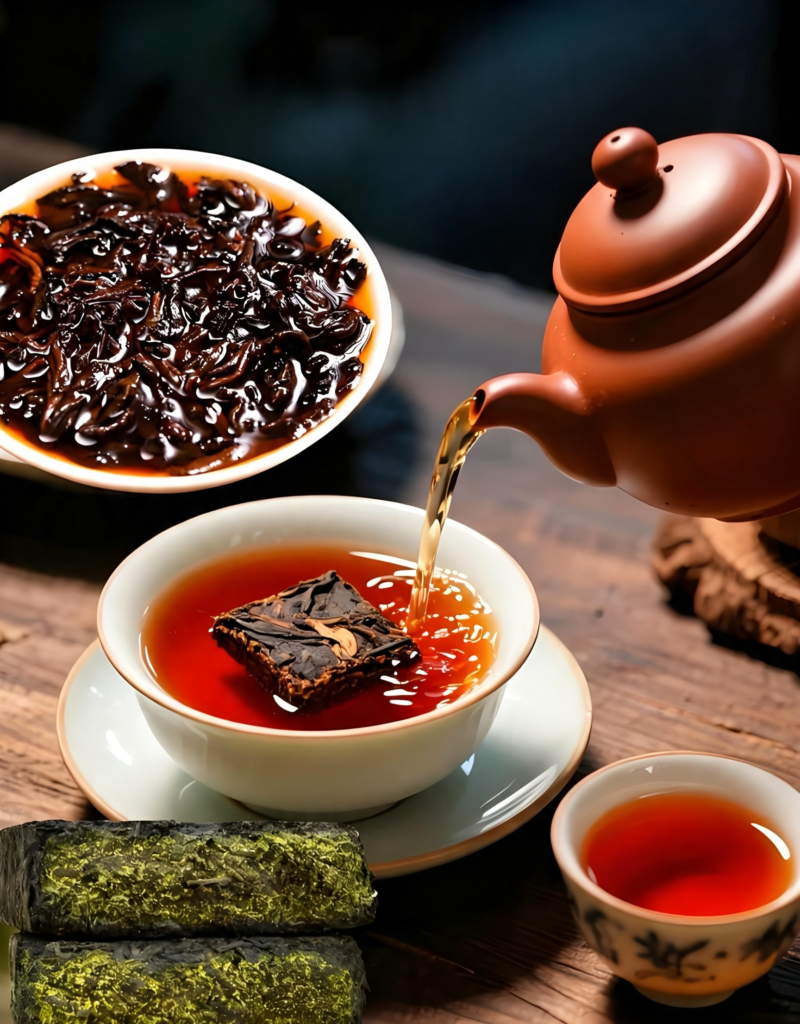
5.3 Anhua Fu Brick Dark Tea
Origin: Anhua County, Hunan; pressed brick tea with golden flower fermentation craft
Appearance: Regular rectangular brick shape, tightly pressed; golden yellow “golden flower” granules densely distributed inside the brick
Dry Color: Dark brownish-black brick surface with glossy sheen; inner golden flowers are bright and plump
Liquor Color: Bright orange-red, clear and luminous
Aroma: Distinctive golden flower fungal aroma, blended with pine wood and aged notes, pure and long-lasting
Taste: Mellow and smooth, sweet and refreshing, with prominent fungal fragrance aftertaste
Leaf Base: Dark brown, thick and complete leaves with tender stems
5.4 Anhua Qianliang Tea (Hua Juan Tea)
Origin: Anhua, Hunan; hand-woven bamboo-wrapped cylindrical tea, weighing about 36.25kg per roll
Appearance: Giant cylindrical shape wrapped in palm leaves and bamboo strips; tightly pressed tea body with natural flower pattern texture
Dry Color: Dark glossy blackish-brown
Liquor Color: Deep orange-red, thick and bright
Aroma: Pure aged aroma with subtle pine smoke and honey undertones; aged Qianliang tea develops rich medicinal and camphor notes
Taste: Full-bodied and mellow, strong returning sweetness, excellent brewing endurance
Leaf Base: Yellowish-brown, thick and elastic leaves with sturdy stems
5.5 Guangxi Liu Pao Tea
Origin: Cangwu County, Wuzhou, Guangxi; post-fermented dark tea aged in bamboo baskets
Appearance: Tightly curled sturdy leaf strips, mostly sold as loose tea or small basket-compressed tea
Dry Color: Dark brown to blackish-brown with glossy sheen
Liquor Color: Deep red-brown, clear and thick
Aroma: Signature betel nut aroma, blended with aged wood and earthy notes; premium grade carries honey and orchid undertones
Taste: Mellow and smooth, sweet with cooling aftertaste, distinctive betel nut lingering charm
Leaf Base: Dark brown, soft and complete leaves
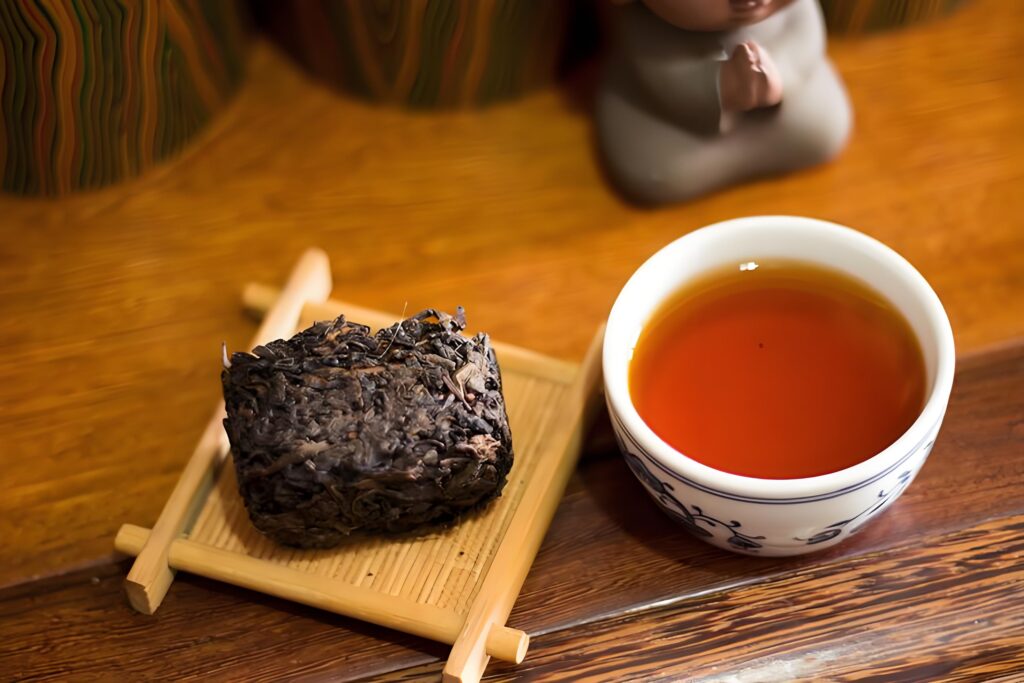
5.6 Ya’an Tibetan Tea (Kangzhuan Tea)
Origin: Ya’an, Sichuan; historical Tea-Horse Road dark tea supplied to Tibetan regions
Appearance: Compressed rectangular brick shape; thick, sturdy leaves with abundant stems
Dry Color: Deep dark brown with glossy surface
Liquor Color: Deep red-brown, bright and transparent
Aroma: Rich aged wood and medicinal aroma, with subtle smoky undertones
Taste: Thick and mellow, smooth and sweet, warming mouthfeel, highly brewable
Leaf Base: Dark brown, thick leaves with visible woody stems
5.7 Jingyang Fu Brick Tea
Origin: Jingyang County, Shaanxi; Silk Road golden flower dark tea with hand-crafted fermentation
Appearance: Compact rectangular brick; abundant plump golden flower granules inside
Dry Color: Blackish-brown brick surface; bright golden yellow flowers inside
Liquor Color: Bright amber-orange, clear and glossy
Aroma: Intense golden flower fungal aroma, with sweet wheat and aged wood undertones
Taste: Mellow and smooth, sweet and full-bodied, with long fungal fragrance aftertaste
Leaf Base: Yellowish-brown, neat and soft leaves
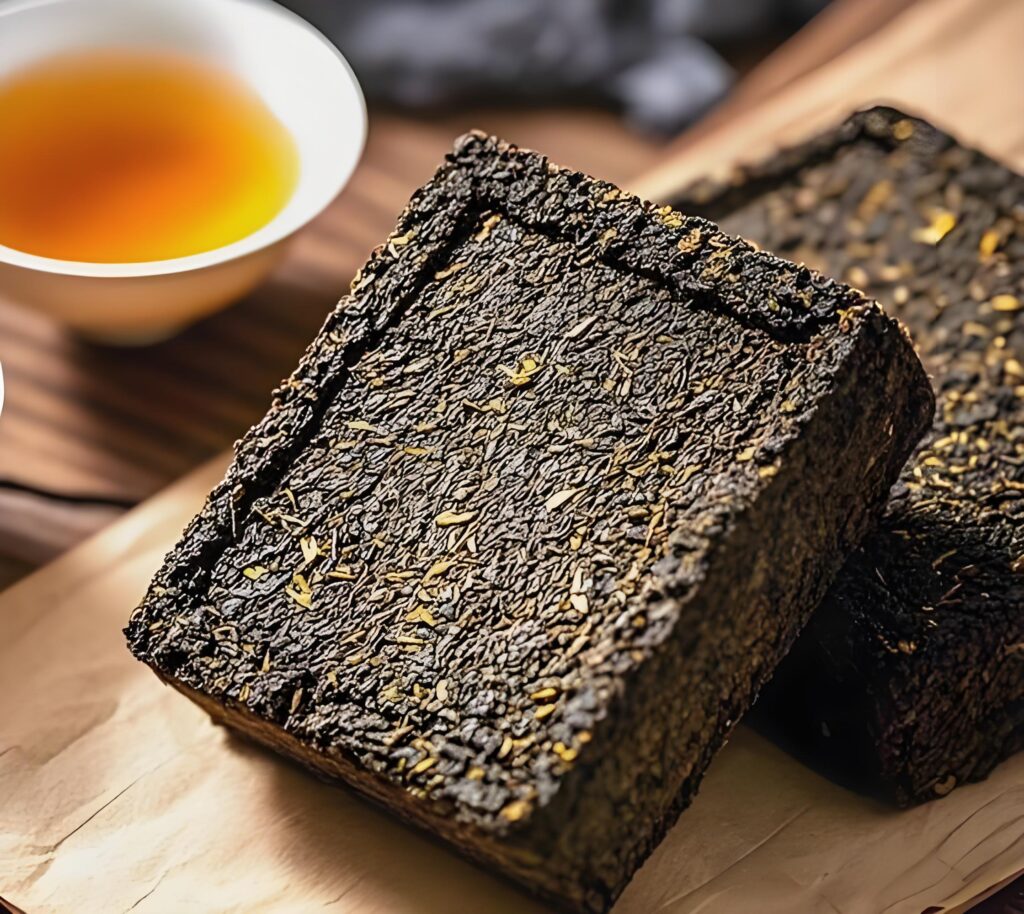
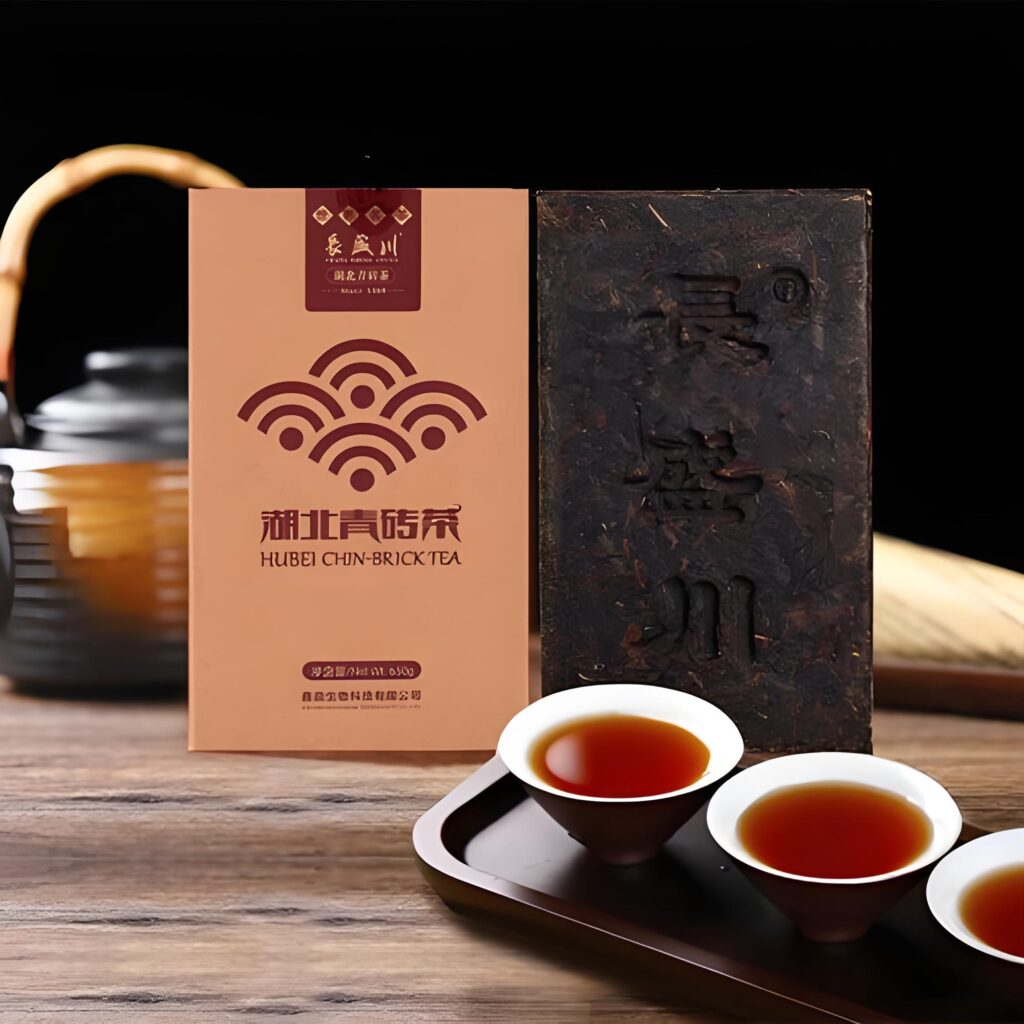
5.8 Hubei Green Brick Tea
Origin: Xianning, Hubei; made from Laoqing tea raw material, historically supplied to northern pastoral regions
Appearance: Rectangular brick shape, tightly pressed; textured surface with natural leaf patterns
Dry Color: Greenish-brown to dark brown, matte glossy surface
Liquor Color: Deep orange-red, bright and clear
Aroma: Pure aged wood aroma, with subtle green herbal undertones
Taste: Mellow and thick, smooth sweet aftertaste, strong brewing resistance
Leaf Base: Dark brown, thick and complete leaves with stems
5.9 Anhua Tianjian Dark Tea
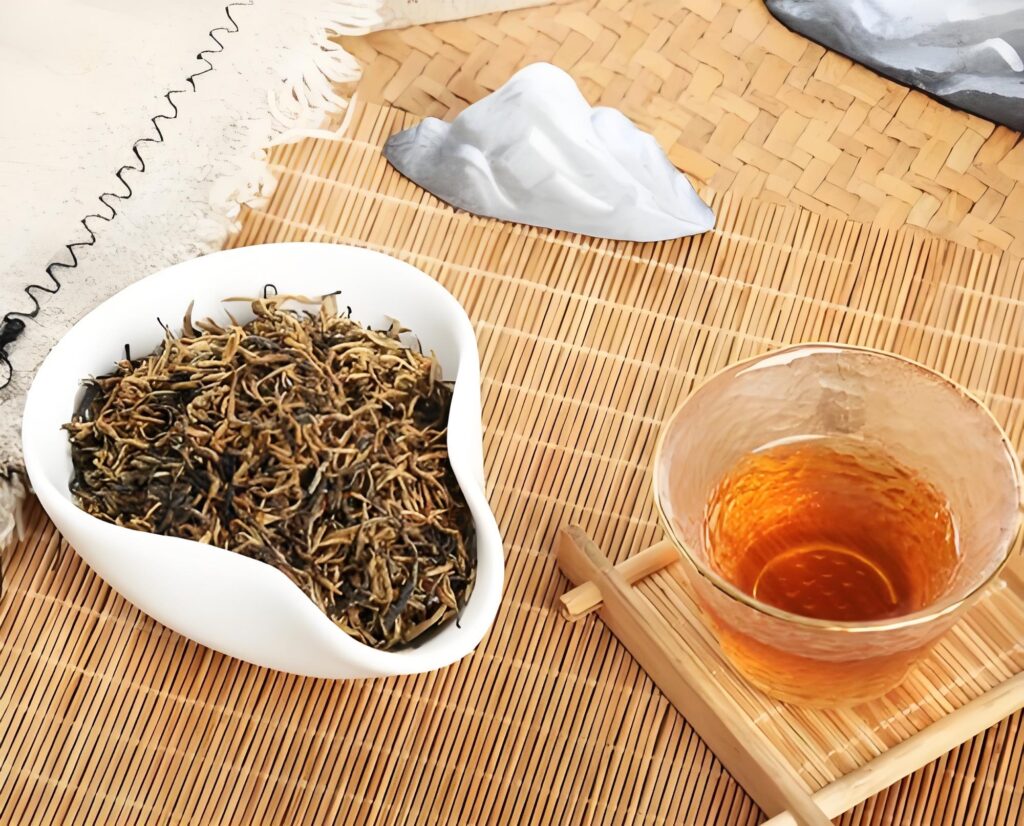
Origin: Anhua, Hunan; highest grade of Hunan “Three Tips” dark teas, made from first-grade black raw tea
Appearance: Loose leaf form; neatly curled, tender leaf strips with fine pekoe
Dry Color: Glossy blackish-brown with silvery pekoe highlights
Liquor Color: Bright orange-yellow, clear and luminous
Aroma: Delicate pine smoke and sweet honey aroma, pure and elegant
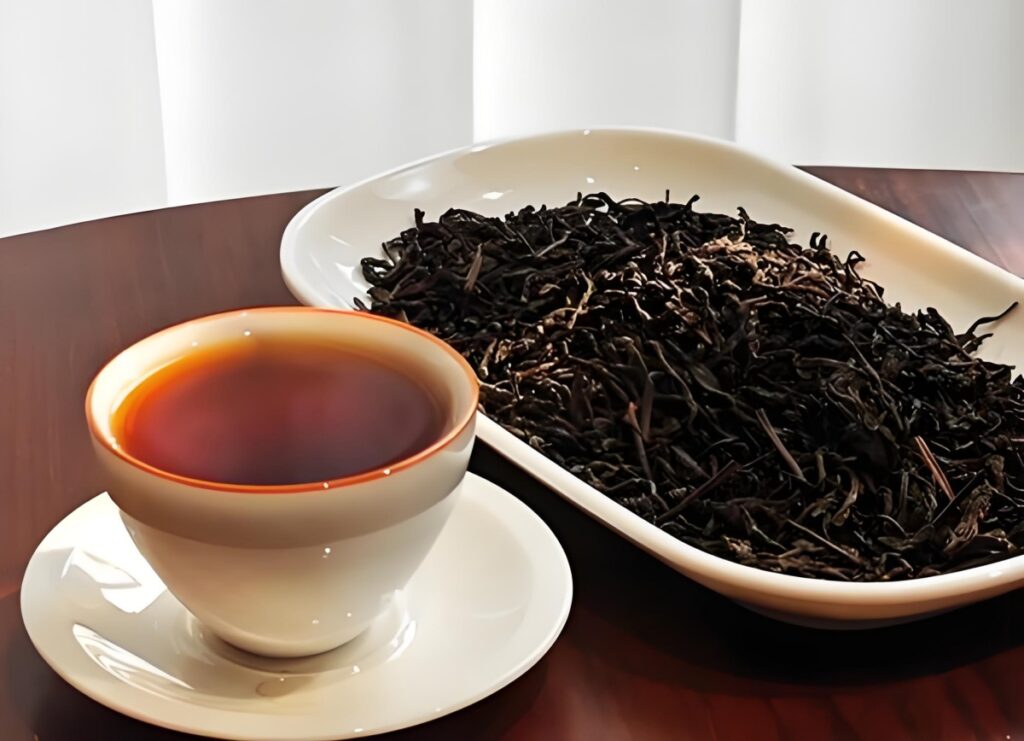
Taste: Mellow and refreshing, sweet with smooth aftertaste, lighter and more elegant than brick dark teas
Leaf Base: Tender yellowish-brown, uniform and soft leaves
5.10 Qionglai Dark Tea
Origin: Qionglai Mountains, Sichuan; one of China’s oldest recorded dark teas, national geographical indication product
Appearance: Tightly twisted leaf strips, available as loose tea or compressed bricks
Dry Color: Deep glossy blackish-brown
Liquor Color: Bright orange-red, clear and transparent
Aroma: Rich aged and fruit wood aroma, with subtle honey sweetness
Taste: Smooth and mellow, sweet aftertaste, clean and balanced mouthfeel
Leaf Base: Yellowish-brown, soft and elastic leaves
六、Science-Backed Health Benefits
Modern clinical research confirms that dark tea’s unique microbial fermentation produces highly active functional compounds including theabrownins, tea polysaccharides and fungal metabolites, delivering multiple evidence-based health effects:
6.1 Gut Microbiome Regulation & Digestive Support
Theabrownins and tea polysaccharides in dark tea exhibit prebiotic-like effects, promoting the growth of beneficial gut bacteria such as Bifidobacterium and Lactobacillus while inhibiting harmful pathogens. Clinical observations show regular dark tea consumption alleviates post-meal bloating and improves intestinal transit, making it especially suitable for people with sluggish digestion and high-fat diets. The golden flower fungus in Fu brick tea further enhances digestive enzyme secretion and supports gut barrier integrity.
6.2 Lipid-Lowering & Metabolic Health Support
Peer-reviewed studies published in Food & Function demonstrate that dark tea theabrownins regulate bile acid metabolism and activate the AMPK pathway, suppressing hepatic fat synthesis and reducing triglyceride absorption. Animal trials show dark tea extract reduces body fat accumulation by 15–16% in high-fat diet models, while also improving glucose tolerance and moderating post-meal blood sugar spikes. Population studies link long-term dark tea consumption to lower LDL cholesterol levels and reduced metabolic syndrome risk.
6.3 Cardiovascular Protection
Dark tea flavonoids and theabrownins improve vascular endothelial function by enhancing nitric oxide production, supporting healthy blood pressure and reducing arterial stiffness. Meta-analysis of cohort studies finds that drinking 3 cups of dark tea daily is associated with 18% lower risk of cardiovascular events. Antioxidant compounds also reduce LDL oxidation, a key driver of atherosclerosis.
6.4 Antioxidant & Anti-Inflammatory Effects
Dark tea’s theabrownin complex exhibits strong free radical-scavenging activity, with DPPH inhibition rates comparable to green tea polyphenols. It also suppresses the NF-κB inflammatory pathway, reducing pro-inflammatory cytokine levels and alleviating chronic low-grade inflammation linked to aging and lifestyle diseases.
6.5 Detoxification & Dietary Grease Relief
Traditional Chinese tea practice has long used dark tea to “cut grease” and aid digestion after heavy meals. Modern research confirms that dark tea polyphenols bind to dietary fat in the digestive tract, reducing absorption and supporting healthy weight management when combined with balanced diet. It also promotes bile secretion to assist with fat breakdown.
七、Brewing Guide
For Compressed Dark Teas (Bricks, Cakes, Qianliang)
Tea Preparation: Pry 5–7 grams of tea leaves from the brick/cake, keeping leaves as intact as possible.
Water Temperature: 95–100°C boiling water; aged dark tea benefits from boiling water to fully extract aged flavors.
Warming & Rinsing: Pre-warm the gaiwan or teapot, rinse tea leaves twice quickly with boiling water and discard to awaken the tea and remove surface dust.
Steeping: First infusion steep for 10–15 seconds, gradually extending steeping time for subsequent brews. Premium dark tea can be infused 8–15 times.
Boiling Method: For aged dark tea and Tibetan tea, boiling in a clay pot delivers the richest flavor. Simmer on low heat for 3–5 minutes after boiling for full-bodied taste.
For Loose Dark Teas (Liu Pao, Tianjian)
Use 4–5 grams of tea per 150ml water, 90–95°C water temperature
First infusion 15–20 seconds, adjust steeping time to taste preference
八、Storage Tips
Dark tea’s “better with age” property requires proper storage conditions to ensure safe, high-quality aging:
Ventilated & Dry Environment: Maintain 40–70% relative humidity. Excessive humidity causes mold; overly dry environment slows aging.
Away from Strong Odors: Dark tea readily absorbs surrounding odors. Store far from spices, cleaning products and other strong-smelling items.
Avoid Direct Sunlight: UV light destroys tea compounds and degrades flavor. Store in opaque containers or dark cabinets.
No Sealed Airtight Storage: Unlike green tea, dark tea needs slight air circulation for natural fermentation. Use breathable paper, bamboo or ceramic containers; avoid fully sealed plastic bags for long-term storage.
Proper Stacking: Compressed teas can be stacked in a cool, clean area. Separate different tea varieties to prevent aroma mixing.
九、SEO FAQ Section
Q1: What is the difference between Chinese dark tea and black tea?
Dark tea (hei cha) is a post-fermented tea where microbial fermentation occurs after initial processing, creating aged, earthy flavors and the ability to improve with storage. Western “black tea” is called red tea in China — it is fully oxidized via enzymatic reaction during production, with malty, fruity flavors and no aging potential. The naming confusion comes from Western terminology referring to dry leaf color while Chinese naming refers to liquor color.
Q2: What are the golden flowers in Fu brick dark tea?
Golden flowers are the probiotic fungus Eurotium cristatum, cultivated through a controlled 15–20 day “fa hua” fermentation process unique to Fu brick tea. These golden yellow granules are beneficial fungi that produce digestive enzymes and unique aroma compounds. They enhance dark tea’s digestive and metabolic benefits and are considered a marker of high-quality Fu brick tea. The flowers are safe to consume and remain active in brewed tea.
Q3: Does dark tea help with weight loss and digestion?
Clinical research supports dark tea’s positive effects on digestion and metabolic health. Theabrownins and tea polysaccharides modulate gut microbiota, enhance digestive enzyme secretion and reduce intestinal fat absorption. Studies show regular dark tea consumption increases fat metabolism rate and reduces post-meal bloating. For best results, drink unsweetened dark tea after heavy meals alongside a balanced diet — it supports healthy weight management but is not a standalone weight loss solution.
Q4: How long can dark tea be stored?
Properly stored dark tea can be aged for decades with improving flavor and quality. Pu-erh tea and Qianliang tea are commonly aged 10–30 years, with premium vintage teas increasing in value. Fu brick and Liu Pao tea also improve significantly over 5–15 years of storage. There is no strict expiration date as long as storage conditions remain dry, ventilated and mold-free. However, peak flavor varies by variety: most dark teas reach optimal taste after 3–10 years of aging.
Q5: Is raw Pu-erh tea classified as dark tea?
This is a commonly debated topic in tea classification. By China’s official national standard, Pu-erh tea (both raw and ripe) is categorized under the dark tea family due to its post-fermentation aging characteristic. Young raw Pu-erh is close to green tea in initial state, but it undergoes slow natural post-fermentation during storage, which aligns with dark tea’s core definition. Ripe Pu-erh with artificial pile-fermentation is unambiguously dark tea. Many tea experts consider raw Pu-erh a transitional form that matures into full dark tea character over years of aging.