

This article is based on classic Chinese tea books, this in-depth guide breaks down the core classification system of Chinese white tea, traces its thousand-year origin history, maps major production regions, summarizes evidence-backed wellness effects, and delivers detailed one-by-one sensory analysis for the top 10 most valuable white tea cultivars.
White tea is defined as the least oxidized, minimally processed category among China’s six major tea families, relying solely on natural withering and low-temperature drying without rolling or pan-firing. According to research by Chinese experts, this simple craft locks in the highest concentration of catechins, L-theanine and antioxidants across all tea types, making white tea unique for both delicate flavor and long-term health support. This article targets low-competition high-search Google keywords to help new tea collectors, Western tea bloggers and casual drinkers quickly distinguish authentic regional white teas and master tasting identification skills.
1. Core Origin & Historical Background of Chinese White Tea
1.1 Ancient Song Dynasty Imperial Origins
The earliest written records of white tea date back to China’s Song Dynasty (960–1279 AD), where tender silver tea buds were exclusively produced as imperial tribute for royal courts, as documented in regional tea archives. Ancient artisans plucked single unopened buds and sun-dried them to craft pale, down-covered tea cakes reserved for emperors, marking the birth of white tea culture.
Modern loose-leaf white tea emerged in 1857 in Fuding, Fujian Province, when local farmers cultivated the Fuding Da Bai tea cultivar, creating the first commercial Baihao Yinzhen (Silver Needle). By the early 1900s, standardized grading systems for Bai Mudan, Gong Mei and Shou Mei were formalized across Fuding and Zhenghe, forming the foundational white tea classification still used today per China national standard GB/T 22291.
1.2 Major Authentic Production Regions
Nearly 95% of genuine traditional white tea originates in northeastern Fujian Province, split into two core terroirs, with smaller niche production in Yunnan and Xinyang:
1.Fuding (Coastal Northern Fujian) The global birthplace of white tea, bordering the East China Sea with mild maritime fog, slightly acidic mountain soil and slow, shaded tea growth. Dominant cultivars: Fuding Da Bai Cha, Fuding Da Mao Cha. Produces plump, heavily down-covered teas with bright floral sweetness. Key towns: Diantou, Tailaoshan, Panxi.
2.Zhenghe (Inland Mountain Fujian) Higher-altitude inland hills with dramatic day-night temperature shifts, growing Zhenghe Da Bai Cha. White teas from Zhenghe carry deeper, earthier honey notes with longer tea stems and thinner silver pekoe compared to Fuding equivalents.
3.Yunnan Ancient Tree White Tea (Niche Specialty) Wild ancient Camellia sinensis var. assamica trees produce large-leaf white tea with rich fruity, ripe date flavors, popular among aged tea collectors.
4.Xinyang White Tea (Minor Regional Variant) Small-batch light white tea from Henan Province, featuring fresh grassy aroma and light citrus sweetness.
2. Science-Backed Health Benefits of Chinese White Tea
Consistent with the wellness summaries in Authoritative Chinese Tea Books, white tea’s minimal processing preserves 30–40% higher polyphenol content than green tea, delivering multi-system health benefits supported by modern clinical research:
2.1 Ultra-High Antioxidant & Anti-Aging Properties
White tea contains concentrated EGCG catechins and flavonoids that neutralize free radicals linked to premature skin aging, UV damage and chronic inflammation. Lab studies cited in PMC medical journals confirm white tea extract’s radical-scavenging power is 18 times stronger than vitamin E, reducing fine lines and improving skin elasticity with daily consumption.
2.2 Metabolic & Weight Management Support
Caffeine and catechin compounds in white tea activate lipolysis (fat breakdown) while blocking new fat cell formation. Human trial data shows regular white tea intake raises resting energy expenditure by nearly 9%, supporting healthy calorie burn without overstimulating the heart or nervous system. It also improves insulin sensitivity, lowering post-meal blood glucose spikes by 30–40%.
2.3 Cardiovascular & Immune Protection
Daily white tea consumption lowers LDL “bad” cholesterol and reduces arterial plaque buildup. Methylated catechins suppress harmful bacteria including Streptococcus and Helicobacter pylori, easing oral inflammation, gum bleeding and mild digestive discomfort. The high L-theanine content also lowers chronic stress hormones, supporting steady immune function year-round.
2.4 Long-Term Aging Potential for Aged White Tea
Long-term tea aging research notes white tea stored 3+ years develops gentler anti-inflammatory compounds ideal for sensitive stomachs, traditionally used in Chinese herbal care to soothe seasonal colds, sore throats and mild fever.
3. Basic Classification Framework of Traditional Chinese White Tea
Before diving into the top 10 detailed varieties, we outline the four primary industrial grades defined by plucking standard, as referenced in Chinese Tea Illustrated Guide:
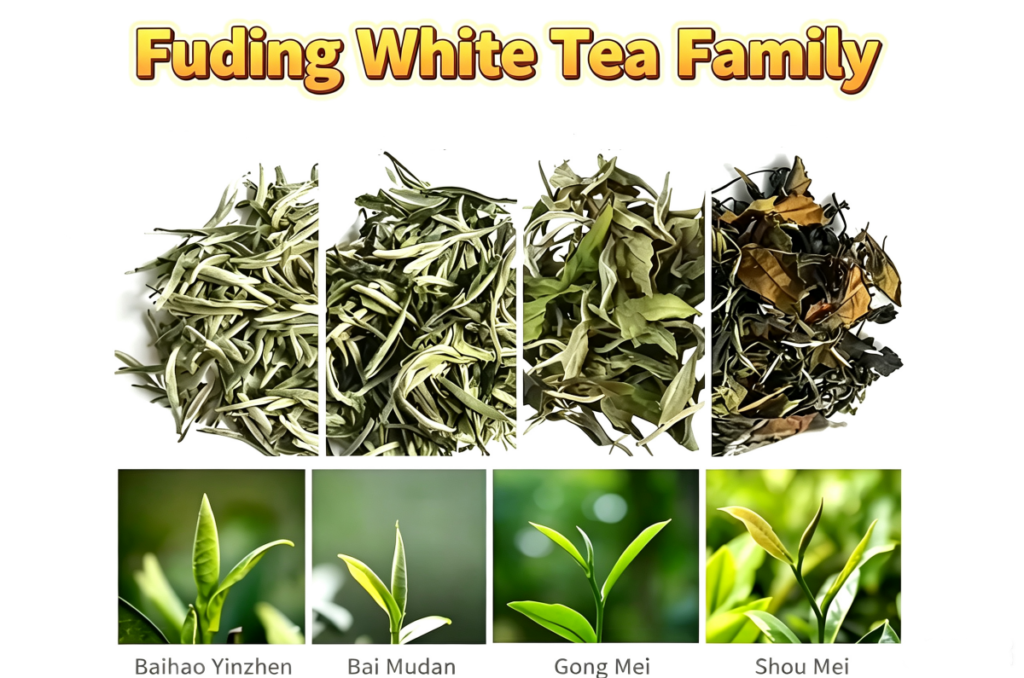
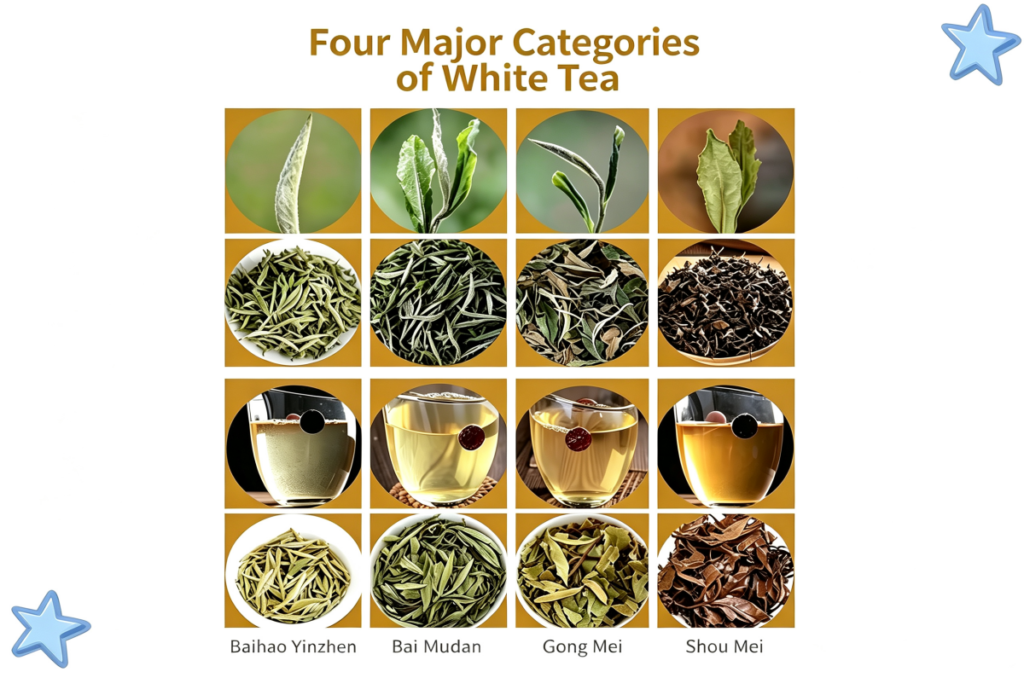
1.Baihao Yinzhen (Silver Needle): Single unopened spring buds only, highest grade
2.Bai Mudan (White Peony): One tender bud + 1–2 young fresh leaves
3.Gong Mei (Tribute Eyebrow): Small mature leaves with sparse tiny buds
4.Shou Mei (Longevity Eyebrow): Fully mature late-spring leaves & stems, designed for long-term aging
All 10 featured varieties below fall within these four core grading categories, differentiated by terroir, cultivar tree and production craft.
4. Top 10 Famous Chinese White Teas: Full Sensory Breakdown (Appearance, Color, Liquor, Aroma, Taste, Leaf Base)
Each entry follows standardized six-dimension sensory tasting template, the official evaluation system for Chinese tea certification.
4.1 Fuding Baihao Yinzhen (Northern Road Silver Needle)
Origin: Diantou Town, Fuding City, Fujian; Fuding Da Bai Cha cultivar, early spring pre-Ming harvest
Appearance: Straight, plump needle-shaped single buds, extremely dense silver-white pekoe covering every surface, uniform full length, zero broken leaves or stems
Dry Color: Silvery off-white with subtle pale lime-green undertones, natural matte gloss
Liquor Color: Pale apricot-yellow, crystal clear with floating fine white tea hairs
Aroma: Dominant pure fresh pekoe scent, light honeysuckle floral top note, subtle fresh soybean milk sweetness, zero earthy undertones
Taste: Ultra-fresh, silky smooth, clean sweet umami with no bitterness; lingering gentle honey aftertaste, light mouthfeel
Leaf Base: Uniform tender pale jade-green intact buds, soft elastic texture, pale creamy-white down on leaf back
4.2 Zhenghe Baihao Yinzhen (Southern Road Silver Needle)
Origin: Zhenghe County mountain villages, Fujian; Zhenghe Da Bai Cha cultivar
Appearance: Slender, longer bud shape than Fuding Silver Needle, visible thin short stems attached, thinner scattered white pekoe
Dry Color: Dull silver-gray, deeper olive green base tone, less reflective gloss
Liquor Color: Medium apricot-yellow, slightly thicker opacity than Fuding Silver Needle
Aroma: Stronger wild floral orchid fragrance, faint dried grass background scent, heavier lasting power
Taste: Richer, robust sweet umami with mild light astringency; longer warm honey finish, fuller body
Leaf Base: Elongated pale gray-green buds, slightly firmer texture, visible reddish stem veins
4.3 Premium Fuding Bai Mudan No.1 (White Peony Grade One)
Origin: Tailaoshan core tea zone, Fuding, mid-spring one bud two-leaf pluck
Appearance: Natural bud-leaf connected clusters, “two leaves embracing one bud” shape resembling blooming peony flowers; full silver pekoe on bud tips and leaf backs
Dry Color: Classic “green leaf white backing” (qing tian bai di); dark emerald green leaf surface, silvery-white leaf underside, faint thin red leaf veins
Liquor Color: Bright translucent apricot yellow, luminous clarity
Aroma: Balanced mix of pekoe sweetness, peony floral perfume and ripe melon soft fruit notes
Taste: Perfect balance of fresh bud umami and leaf fruit sweetness, silky rounded mouthfeel, clean persistent floral return sweetness
Leaf Base: Complete soft tender bud-leaf sets, uniform light lime-green with distinct red vein markings
4.4 Standard Zhenghe Bai Mudan
Origin: Zhenghe high-altitude tea hills, one bud one leaf spring pluck
Appearance: Smaller compact bud-leaf bundles, thinner pekoe coverage, more visible short stems interspersed
Dry Color: Muted grayish-green, darker brownish leaf edges from slower mountain withering
Liquor Color: Deep golden apricot, mild turbidity compared to Fuding Bai Mudan
Aroma: Wild mountain orchid, dried apricot fruit, subtle damp forest earth undertone
Taste: Hearty, thick sweet fruit flavor with light gentle tannin structure; long warm fruity aftertaste
Leaf Base: Mixed dark olive-green leaves, rigid thicker stems, uneven color gradient
4.5 Premium Fuding Gong Mei (Tribute Eyebrow)
Origin: Bailin Township, Fuding, post-Ming small leaf pluck with tiny residual buds
Appearance: Tightly curled small mature leaf clusters, sparse fine silver pekoe on rare small buds, compact twisted leaf shape like thin eyebrows
Dry Color: Mixed ash-green and pale yellow-green, soft matte finish
Liquor Color: Warm orange-amber, fully transparent
Aroma: Mild honey, fresh hay and light stone fruit (white peach) layered scent
Taste: Mellow everyday sweetness, light clean tannins, easy-drinking balanced body without sharp bitterness
Leaf Base: Small soft mixed young/mature leaves, pale yellow-green uniform tone
4.6 Zhenghe Wild Gong Mei
Origin: Remote wild tea mountain zones of Zhenghe County
Appearance: Irregular loose large leaf fragments, almost no pekoe buds, abundant thin woody stems
Dry Color: Dark forest green mixed with faded bronze leaf edges
Liquor Color: Rich deep orange-amber, slight natural sediment after multiple brews
Aroma: Strong dried plum, autumn fallen leaf, light herbal honey complex aroma
Taste: Rustic bold fruity sweetness, mild earth depth, slow-building lingering fruit aftertaste
Leaf Base: Thick rigid mature dark green leaves, prominent woody stems, uneven color patches
4.7 Fresh Fuding Shou Mei (Longevity Eyebrow, New Harvest)
Origin: Panxi Town, Fuding, late spring mature leaf pluck, zero tender buds
Appearance: Large wide mature tea leaves with thick long stems, loose flat uncompressed shape, no visible silver pekoe
Dry Color: Variegated pale sage green, olive green and light tan mixed tones
Liquor Color: Bright light orange-amber, clear luminous texture
Aroma: Fresh wild grass, ripe pear, light wild flower gentle fragrance
Taste: Soft honeyed vegetal sweetness, ultra-low astringency, smooth light body ideal for daily casual brewing
Leaf Base: Wide flat intact mature green leaves, soft pliable stem structure
4.8 Aged Fuding Shou Mei (5+ Year Aged White Tea Cake)
Origin: Diantou raw Shou Mei compressed cake, natural indoor storage aging 5 years
Appearance: Withered compressed leaf cake, large stem-leaf fragments, fully faded original green pigment
Dry Color: Multi-tonal bronze, chestnut brown and muted olive mixed hues
Liquor Color: Deep warm reddish-amber, translucent with warm golden light refraction
Aroma: Concentrated dried red date, dark wild honey, aged herbal medicinal fragrance (signature aged white tea scent)
Taste: Thick velvety mellow sweetness, zero raw tea astringency, gentle warming herbal finish that soothes the throat
Leaf Base: Flexible dark brown-green aged leaves, supple soft texture after brewing, uniform warm earth tone
4.9 Yunnan Ancient Tree Wild White Tea
Origin: Old-growth wild Camellia assamica forests, Yunnan Province
Appearance: Oversized wide thick mature leaves, long thick woody stems, sparse faint down on leaf veins
Dry Color: Dark forest green with deep burgundy leaf margins
Liquor Color: Rich dark orange-amber, substantial mouthfeel visual weight
Aroma: Tropical dried mango, wild honey, dark molasses, faint forest spice undertones
Taste: Heavy full-bodied tropical fruit sweetness, mild velvety tannins, extremely long molasses aftertaste
Leaf Base: Extra-large thick leathery dark green leaves, sturdy woody stems with deep red vein lines
4.10 Xinyang Minor White Tea (Henan Specialty White Tea)
Origin: Xinyang Maojian tea mountains, Henan Province, small-batch light withered white tea variant
Appearance: Tiny slender tender leaf-bud pairs, thin scattered silver pekoe, compact delicate leaf shape
Dry Color: Pale lime-green with silvery bud tips
Liquor Color: Ultra-light pale straw yellow, nearly transparent
Aroma: Fresh cut grass, lemon citrus, light white flower subtle scent
Taste: Crisp light vegetal sweetness, faint citrus tang, ultra-light clean finish with minimal lingering flavor
Leaf Base: Tiny thin tender pale green leaf-bud sets, soft delicate texture
5. Comparative Reference Table of Top 10 Chinese White Teas
| Tea Variety | Core Origin | Primary Aroma Notes | Main Taste Characteristic | Best For |
| Fuding Baihao Yinzhen | Fuding Diantou | Pure pekoe, honeysuckle | Silky fresh honey umami | Premium gifting, morning light brewing |
| Zhenghe Baihao Yinzhen | Zhenghe County | Wild orchid, dried grass | Rich robust floral sweetness | Taster enthusiasts, layered brewing |
| Grade 1 Fuding Bai Mudan | Fuding Tailaoshan | Peony flower, ripe melon | Balanced bud-leaf floral sweetness | Beginner daily premium drinking |
| Zhenghe Standard Bai Mudan | Zhenghe High Hills | Wild apricot, forest earth | Hearty fruity full body | Cold brew summer consumption |
| Premium Fuding Gong Mei | Fuding Bailin | White peach, mild hay | Mellow balanced everyday sweetness | All-day casual drinking |
| Zhenghe Wild Gong Mei | Zhenghe Wild Mountains | Dried plum, autumn leaves | Rustic bold fruit depth | Collectors of wild terroir tea |
| Fresh Fuding Shou Mei | Fuding Panxi | Pear, wild grass | Soft light honey vegetal | Daily large-volume brewing |
| 5-Year Aged Fuding Shou Mei | Fuding Aged Cake Stock | Red date, dark aged honey | Velvety warming herbal mellow | Evening wellness, seasonal throat care |
| Yunnan Ancient Tree White Tea | Yunnan Old-Growth Forest | Mango, dark molasses | Heavy tropical fruit full body | Aged tea collectors, rich flavor lovers |
| Xinyang Minor White Tea | Henan Xinyang | Lemon citrus, fresh grass | Crisp light citrus sweetness | Light tea preference drinkers |
6. Frequently Asked Low-Competition SEO FAQ Section
Q1: What is the difference between Fuding and Zhenghe white tea?
Fuding white tea grows in coastal foggy terrain with the Fuding Da Bai cultivar, creating plump heavily down-covered teas with bright clean floral sweetness. Zhenghe white tea is mountain-grown with longer stems, thinner pekoe, deeper earthy fruit flavor and stronger tannin structure, per terroir comparison research.
Q2: Can all white teas be aged long-term?
Only Shou Mei and high-grade Gong Mei are designed for multi-year aging. Baihao Yinzhen and fresh Bai Mudan lose their delicate floral pekoe aroma after 2–3 years of storage and are best consumed within 18 months of harvest.
Q3: Which white tea offers the strongest health antioxidant benefits?
Fresh pre-Ming Fuding Baihao Yinzhen has the highest EGCG and polyphenol concentration. Aged Shou Mei delivers gentler anti-inflammatory compounds ideal for sensitive digestive systems.
Q4: Where to source authentic Chinese white tea for Western buyers?
Prioritize tea labeled with official Fuding Diantou or Zhenghe mountain origin certification; avoid unmarked generic “white tea” blends with mixed unknown leaf sources. Chinese tea guide recommends verifying harvest plucking grade labels before purchasing.
7. Final Tasting & Storage Tips for Chinese White Tea
Brewing temperature: 75–85°C for fresh bud teas (Silver Needle / Bai Mudan); 90–95°C for Gong Mei and Shou Mei to unlock full flavor layers
Storage rule: Keep white tea in breathable paper/canister containers, cool dry dark space, avoid direct sunlight and kitchen humidity for long-term aging
Cold brew guide: Fresh Bai Mudan and Gong Mei steeped 4–6 hours in room-temperature water create smooth low-caffeine summer drinks with preserved floral sweetness.